

ongoing support
Bladder & Urinary Health
Energy & Fatigue
Herx & Cytokine Support
Immune Defense
Pain Support
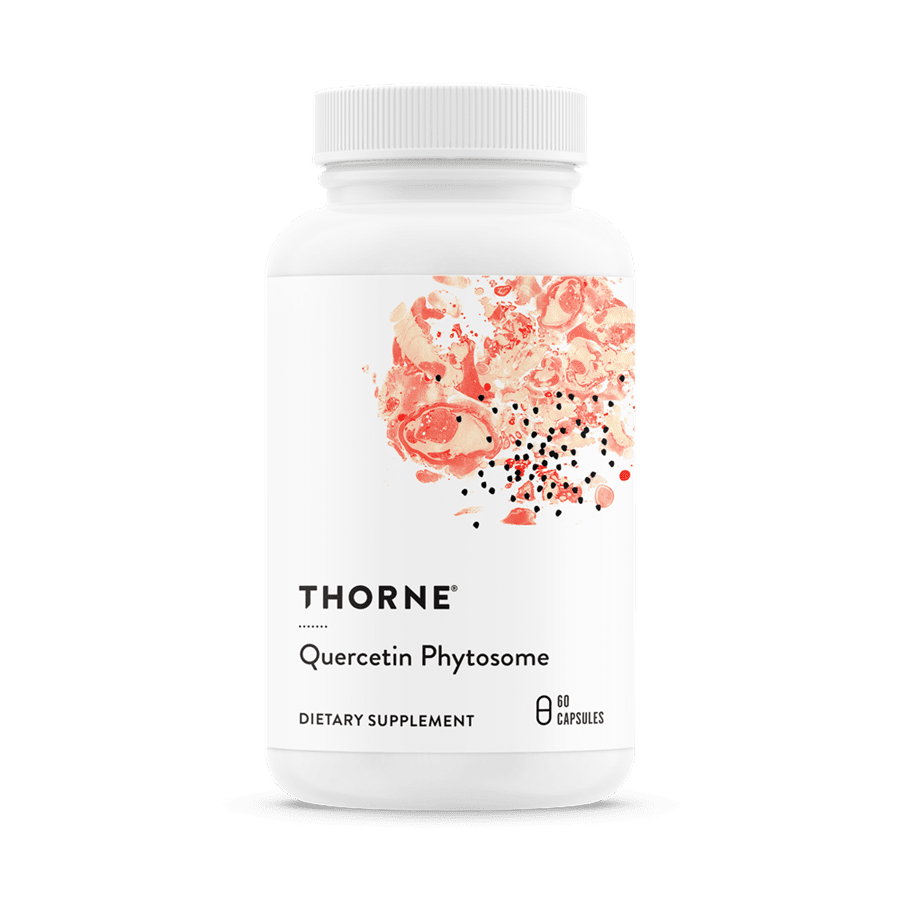
A highly bioavailable quercetin bound to sunflower phospholipids, formulated to support immune system health, healthy histamine levels, and antioxidant protection as part of daily wellness.



10% off all supplements
Use code at checkout
MARTYROSS10


Opens Femologist.com in a new tab
TreatLyme and Dr. Marty Ross, MD, are affiliated with Femologist. We may earn a commission on purchases made through this link or code.
Quick Facts
Key Ingredients
Quercetin Phytosome 250 mg
Third-party Testing

cGMP
GRMA
NSF Certified
TGA GMP
Dietary

Dairy-free

Derived from natural colors

Derived from natural flavors

Gluten-free

Soy-free

Written by

Dr. Marty Ross, MD
Updated
September 24, 2026
Dr. Ross's Expert Review
Quercetin Phytosome is one of the supplements I reach for most often when someone needs immune balance and antioxidant support. Quercetin is a plant bioflavonoid found in onions and the colored skins of fruits and vegetables, and in my practice it is a workhorse for supporting healthy histamine levels and a balanced inflammatory response.
The reason I like this specific product is absorption. Plain quercetin is poorly absorbed from the gut. Thorne binds it to fat-based phospholipids from sunflower, which the manufacturer notes can make it up to 20 times more absorbable than standard quercetin extracts. Better absorption means less product is needed to get where it is going.
I use quercetin most often for people working on healthy histamine balance and mast cell support, seasonal immune support, and cytokine balance within a full regimen. The lab research here is encouraging. Published studies show quercetin inhibits mast cell degranulation and reduces histamine release in cell and animal models, and a broad review paper documents its antioxidant and inflammation-regulating properties.
Much of this science findings are from test tube and animal work, not large human trials, so I treat quercetin as a support tool. It works best as part of a coordinated plan.
Dosing in my practice is 1 to 2 capsules two to three times daily with meals. It is well tolerated by most, though some people report headaches with flavonoids like this. Anyone who is pregnant, nursing, or taking prescription medication should review it with their health care practitioner first.
These statements have not been evaluated by the Food and Drug Administration. This product is not intended to diagnose, treat, cure, or prevent any disease. Dr. Ross has a financial relationship with the Femologist store, where this product is sold.
How I Use It in My Practice
I use Quercetin Phytosome as ongoing daily support, most often 1 to 2 capsules two to three times a day with meals. It is my choice when someone needs help with histamine balance, mast cell stability, or cytokine support inside a fuller regimen. In more difficult situations I add luteolin alongside it. If headaches or other discomfort show up, I have people pause it and discuss continued use with their physician.
This reflects Dr. Ross's clinical experience and is educational, not medical advice. Work with your treating physician before starting, stopping, or changing any supplement or medication.
The Research, in Dr. Ross's Words
Quercetin has a consistent laboratory story around mast cells and histamine. A 2024 study found quercetin inhibits MRGPRX2-mediated mast cell degranulation through the MyD88/IKK/NF-kB and PI3K/AKT pathways, reducing histamine release. An earlier in vitro and in vivo study showed that conjugating ovalbumin with quercetin reduced IgE binding, mast cell protease levels, and plasma histamine. Those two papers agree on the core point, that quercetin acts on the machinery that drives histamine release.
A 2023 comprehensive review adds breadth, documenting antioxidant and inflammation-regulating effects.
On bioavailability, a 2021 paper on quercetin and cyclodextrin inclusion complexes discusses the absorption problem directly, which is the gap the phytosome form is built to address.
Be aware that this research supports the functional and mechanistic research base for how quercetin could work in humans. However, there are no substantial human trials to determine real world benefits.
References
From:
Thorne
Give your immune system an advantage with the optimized, plant-based antioxidant support of quercetin. As a powerhouse antioxidant, Quercetin Phytosome supports healthy seasonal immune system function and promotes a healthy aging process for well-rounded daily wellness support.
Directions of Use
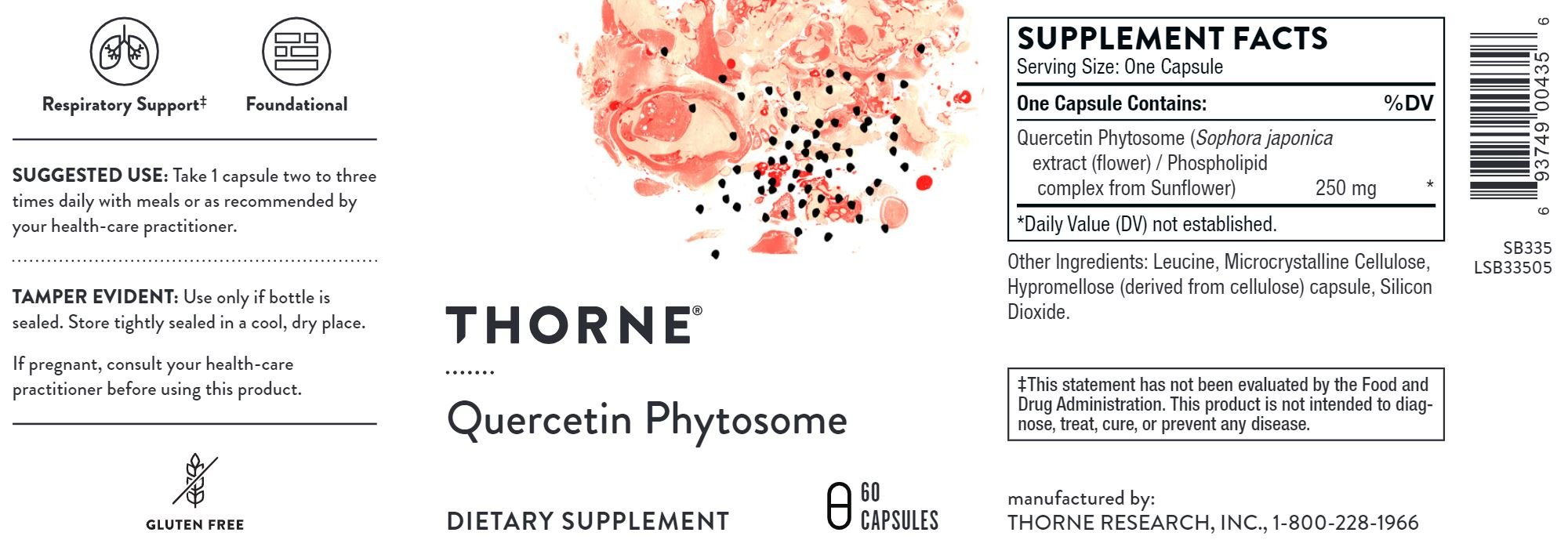
Take 1 capsule two to three times daily with meals or as recommended by your health-care practitioner.
Does not contain
dairy
gluten
soy
ALLERGY WARNING: This product is contraindicated in an individual with a history of hypersensitivity to any of its ingredients. PREGNANCY: If pregnant, consult your health-care practitioner before using this product. INTERACTIONS: There are no known adverse interactions or contraindications at publication date.
Excerpted from Thorne's product information. These statements have not been evaluated by the Food and Drug Administration.
Supplement Facts
Serving Size: 1 Capsule
Servings Per Container: 60
| One Capsule Contains | Amount | |
|---|---|---|
Quercetin Phytosome Sophora japonica extract / Phospholipid complex from Sunflower | 250 mg | |
Common Questions about Quercetin Phytosome
Answers are general educational information, not medical advice for your situation.
Quercetin Phytosome
By Thorne
From $42.00 · Save 10% with code MARTYROSS10


Guide
Mast Cell Activation Syndrome in Infections & Mold Toxicity
Mast cell guide that says to start with quercetin for mast cell support.

Guide
How to Manage Extreme Sensitivity in Lyme Disease or Mold Toxicity
Sensitivity guide that features quercetin for mast cell stabilization.
Guide
Best Brain Fog & Thinking Repair Guide
Brain fog guide that includes quercetin dosing for histamine support.