
ongoing support
Energy & Fatigue
Vitamins & Minerals
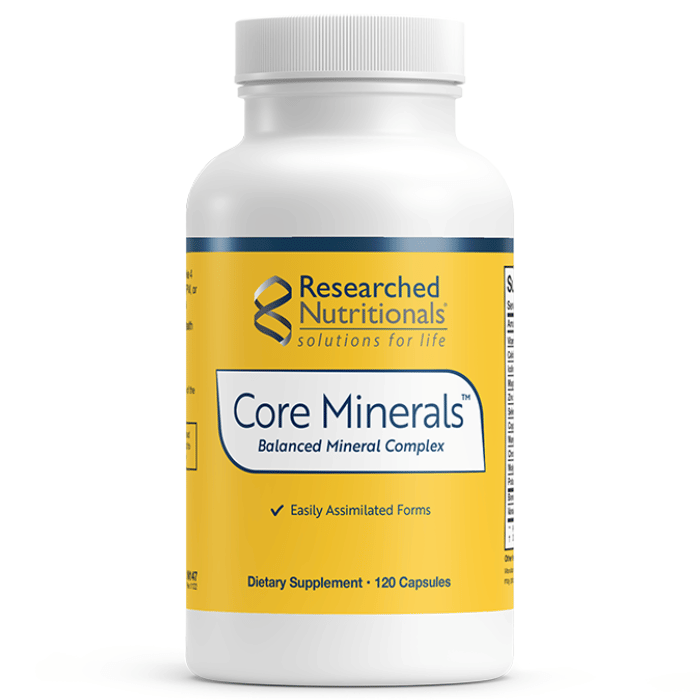
A balanced multi-mineral complex from Researched Nutritionals with twelve minerals plus vitamin D3, each in easily assimilated chelated forms. Supports bone health, nerve signaling, immune function, and daily energy as part of a healthy foundation.



10% off all supplements
Use code at checkout
MARTYROSS10


Opens Femologist.com in a new tab
TreatLyme and Dr. Marty Ross, MD, are affiliated with Femologist. We may earn a commission on purchases made through this link or code.
Quick Facts
Key Ingredients
Vitamin D3 5 mcg
Calcium 300 mg
Third-party Testing
Dietary

GMO-free

Vegetarian

Written by

Dr. Marty Ross, MD
Updated
September 24, 2026
Dr. Ross's Expert Review
Core Minerals is a foundation supplement: twelve minerals plus a small amount of vitamin D3 in one capsule formula. The minerals are chelated forms, glycinate, picolinate, citrate, malate, which are the forms I prefer because the body assimilates them well. There is no iron, which suits many people in my practice who do not need it.
Why does this matter? Minerals provide tissue support, nerve signaling, muscle function, and are involved in dozens of enzyme systems. People eating a processed diet, or anyone with absorption issues, often run low on key minerals without knowing it. A broad mineral complex covers the gaps caused by a narrow diet.
The D3 is there for a practical reason: calcium absorption depends on vitamin D, so pairing them makes sense. Iodine comes from kelp, magnesium and calcium sit at 300 mg each, zinc at 15 mg as picolinate. The doses are sensible, not megadoses.
A formula like this has not been tested as a whole in clinical trials; the research base comes from the function of individual minerals. Zinc alone has a deep literature on immune function, and that is the best-studied mineral in this blend. The rest rests on nutrient science.
How I use it: as a daily foundation, four capsules a day split morning and evening with food. Divided dosing absorbs better than one big dose. If pregnant or nursing, review it with your physician first, and anyone taking medication should check timing, since minerals can bind some drugs.
These statements have not been evaluated by the Food and Drug Administration. This product is not intended to diagnose, treat, cure, or prevent any disease. Dr. Ross has a financial relationship with the Femologist store, where this product is sold.
How I Use It in My Practice
I use Core Minerals as a daily foundation for people with dietary gaps or higher mineral needs. The label dose is four capsules a day, two in the morning and two in the evening, both with food. Divided dosing supports absorption across the day rather than one big hit. If someone takes a medication that minerals can bind, I separate the doses and confirm the timing with their prescriber or pharmacist. I hold it during pregnancy and nursing unless their physician approves it, and I review the full supplement list so mineral totals stay sensible.
This reflects Dr. Ross's clinical experience and is educational, not medical advice. Work with your treating physician before starting, stopping, or changing any supplement or medication.
The Research, in Dr. Ross's Words
In my review of research, on the minerals in this formula the strongest science belongs to zinc. A 2023 meta-analysis of randomized trials found zinc supplementation supported taste function, with picolinate among the forms studied. A 2022 review focused on aging described zinc’s role in maintaining immune integrity, and a 2024 paper reported that adequate zinc levels help keep innate immune cells like neutrophils from hyper-activating.
Other work is earlier stage research. A 2025 rat model study found zinc picolinate supported gut barrier integrity, which is promising but preclinical. A 2022 study in hospitalized COVID patients explored zinc with vitamin C, which tells us about immune support under acute illness. A 2025 nano-zinc paper on antiviral gene expression is a novel early report.
Where these agree: zinc matters for immune function, and low levels work against you. Where they are limited: mostly single-nutrient designs, mixed populations, and doses that do not match this formula’s 15 mg. There is no research that tests the whole blend of minerals in this product.
References
From:
Researched Nutritionals
Core Minerals™ provides twelve minerals plus vitamin D3 in a balanced multi-mineral complex, with each mineral in an easily assimilated form. This iron-free formulation includes vitamin D3 to aid in the absorption of calcium.
Directions of Use
As a dietary supplement, take 2 capsules in the morning, with food, and 2 capsules in the evening, with food, or as directed by your health care professional.
Does not contain
crustacean-shellfish
eggs
fish
gluten
milk
If pregnant or nursing, consult your health care professional before use. California Proposition 65 Warning: This product contains herbs and/or minerals which come from the soil. As such, it may contain small amounts of naturally occurring chemicals. Can expose you to lead, a reproductive toxicant. See www.P65Warnings.ca.gov/food.
Excerpted from Researched Nutritionals's product information. These statements have not been evaluated by the Food and Drug Administration.
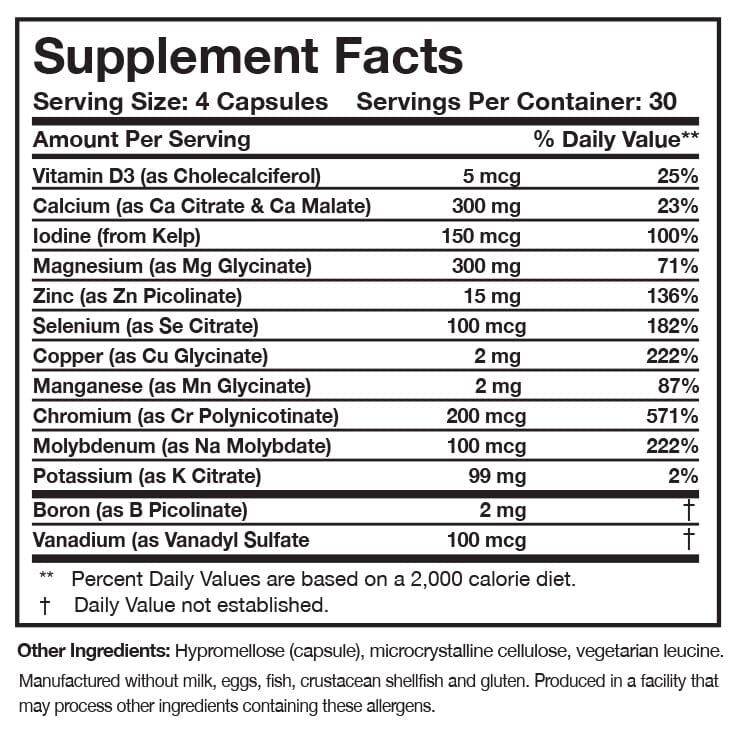
Supplement Facts
Serving Size: 4 Capsules
Servings Per Container: 30
| Amount Per Serving | Amount | |
|---|---|---|
Vitamin D3 as Cholecalciferol | 5 mcg | |
Calcium as Ca Citrate & Ca Malate | 300 mg | |
Iodine from Kelp | 150 mcg | |
Magnesium as Mg Glycinate | 300 mg | |
Zinc as Zn Picolinate | 15 mg | |
Selenium as Se Citrate | 100 mcg | |
Copper as Cu Glycinate | 2 mg | |
Manganese as Mn Glycinate | 2 mg | |
Chromium as Cr Polynicotinate | 200 mcg | |
Molybdenum as Na Molybdate | 100 mcg | |
Potassium as K Citrate | 99 mg | |
Boron as B Picolinate | 2 mg | |
Vanadium as Vanadyl Sulfate | 100 mcg | |
Common Questions about Core Minerals
Answers are general educational information, not medical advice for your situation.
Core Minerals
By Researched Nutritionals
From $37.98 · Save 10% with code MARTYROSS10
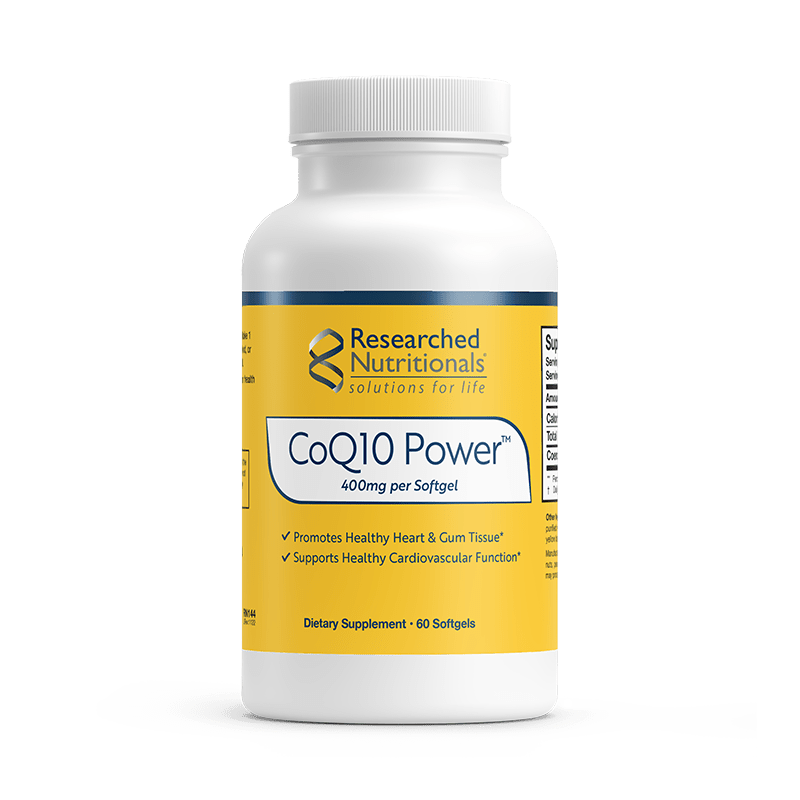
CoQ10 Power
Same maker Energy & Fatigue supplement often used alongside a mineral foundation