

ongoing support
Energy & Fatigue
Mood & Focus
Pain Support
Sleep & Recovery
System Cleanse
Vitamins & Minerals
Well-absorbed magnesium glycinate from Researched Nutritionals, 125 mg of magnesium per capsule, gentle on digestion and less likely to cause loose stools than other magnesium forms. Supports energy, muscle function, and rest.



10% off all supplements
Use code at checkout
MARTYROSS10


Opens Femologist.com in a new tab
TreatLyme and Dr. Marty Ross, MD, are affiliated with Femologist. We may earn a commission on purchases made through this link or code.
Quick Facts
Key Ingredients
Magnesium 250 mg
Third-party Testing
Dietary

Non-GMO

Vegan

Written by

Dr. Marty Ross, MD
Updated
September 24, 2026
Dr. Ross's Expert Review
Magnesium is one of the first nutrients I suggest when someone wants support for energy, muscles, and rest. It is a cofactor in over 300 enzymatic reactions, especially the ones that power the cell energy factories called mitochondria. Many people are deficient in magnesium because our soils and foods are depleted of this essential mineral. Supplementing is a way to meet our physiologic and metabolic needs.
The salt form matters as much as the mineral itself. Magnesium glycinate is well absorbed, fast acting, and very bioavailable. Unlike citrate and other salts it tends not to promote loose stools. This Researched Nutritionals product gives 125 mg of magnesium per capsule, so dosing is flexible allowing for one to four capsules per dose.
My research review is encouraging. Trials and reviews link magnesium status to sleep quality, stress response, and muscle function, and one randomized trial of magnesium bisglycinate at 250 mg improved sleep quality scores over four weeks.
In my practice I recommend this for ongoing support. The label dose is two capsules twice daily with meals. However when I want to support sleep, I often shift part of the dose to the evening. If someone is pregnant, nursing, or under medical supervision, they should discuss using this with their physician first. Anyone living with kidney should also talk to their physician first about using magnesium.
These statements have not been evaluated by the Food and Drug Administration. This product is not intended to diagnose, treat, cure, or prevent any disease. Dr. Ross has a financial relationship with the Femologist store, where this product is sold.
How I Use It in My Practice
I use magnesium glycinate most in symptoms of fatigue, muscle tenderness or aching, tension headaches, and restless sleep, for ongoing support. I like that this form is gentle on the gut and tends not to cause loose stools compared to other magnesium salts forms. My usual approach is two capsules with a meal, then I increase toward the label dose of two capsules twice daily, with a portion of the dose at night when sleep is the goal. If someone reports loose stools or unusual symptoms, I lower the dose rather than push through.
This reflects Dr. Ross's clinical experience and is educational, not medical advice. Work with your treating physician before starting, stopping, or changing any supplement or medication.
The Research, in Dr. Ross's Words
The human literature on magnesium is broad while the evidence for magnesium glycinate is small. A systematic review found preclinical and clinical evidence that magnesium supplementation supports sleep quality and healthy stress response, tied to magnesium status itself. A randomized, placebo-controlled trial of 250 mg magnesium bisglycinate in healthy adults with poor sleep reported improved insomnia severity scores over four weeks, strongest in people with low dietary magnesium. A dose-dependent absorption analysis of different magnesium compounds supports the bioavailability of organic forms like glycinate.
The direction of research evidence is consistent: magnesium status relates to sleep, stress, and muscle function, and glycinate is a tolerable way to raise it. I consider this a foundational support in a larger management program.
References
From:
Researched Nutritionals
This high-quality Magnesium Glycinate offers 125 mg per capsule, allowing for easy dosing from 125mg-500mg (1-4 capsules daily). 120 capsules per bottle provide a minimum of a full 30 day supply even when taking 500mg daily.
Directions of Use
As a dietary supplement, take 2 capsules twice daily with meals or as directed by your healthcare professional.
Does not contain
If pregnant or nursing, consult your health care professional before use.
Excerpted from Researched Nutritionals's product information. These statements have not been evaluated by the Food and Drug Administration.
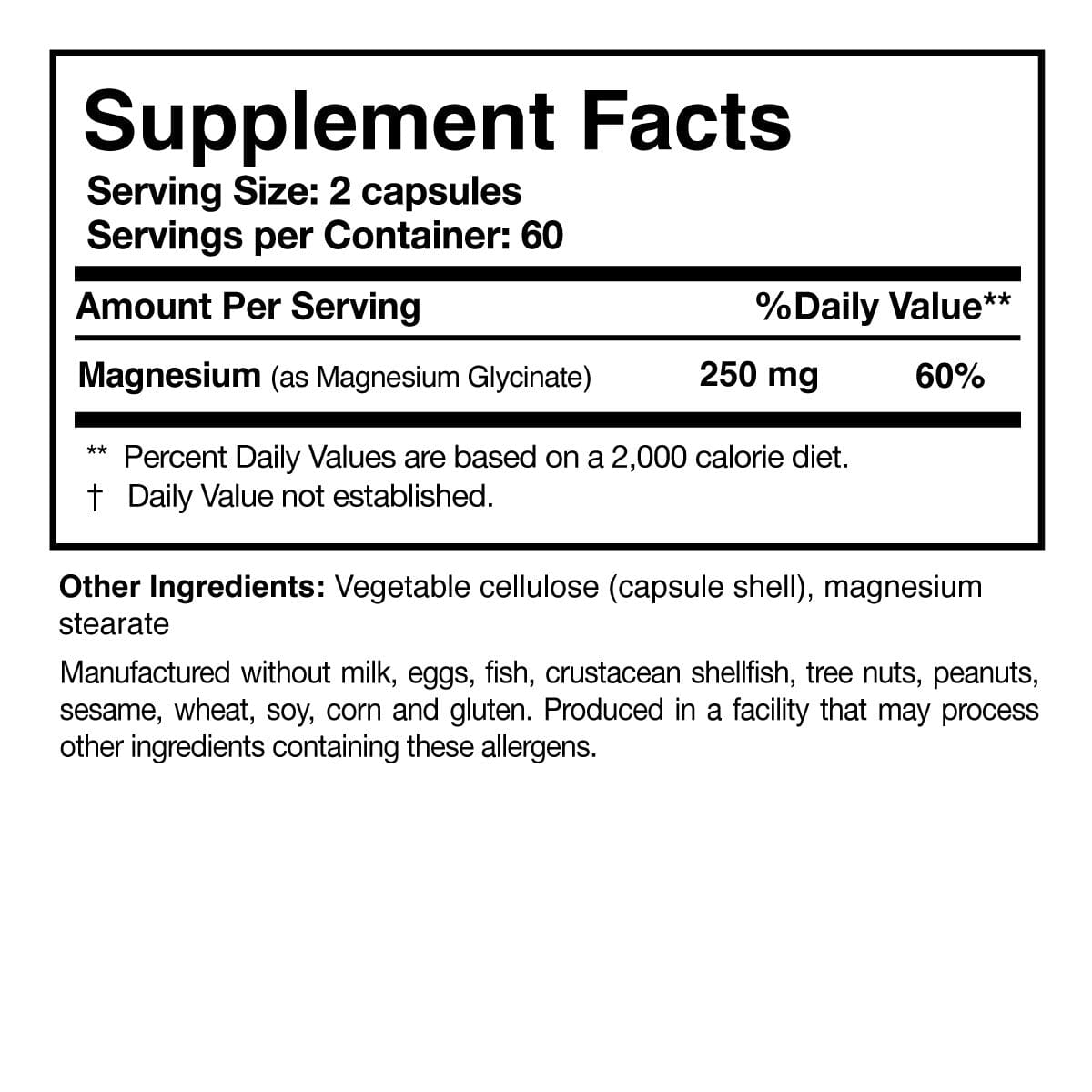
Supplement Facts
Serving Size: 2 Capsules
Servings Per Container: 60
| Amount Per Serving | Amount | |
|---|---|---|
Magnesium as Magnesium Glycinate | 250 mg | |
Common Questions about Magnesium Glycinate
Answers are general educational information, not medical advice for your situation.

Magnesium Glycinate
By Researched Nutritionals
From $29.98 · Save 10% with code MARTYROSS10