
ongoing support
Energy & Fatigue
Gut & Digestive Health
Hormone Support
Immune Defense
Mood & Focus
Nervous System & Stress
Vitamins & Minerals
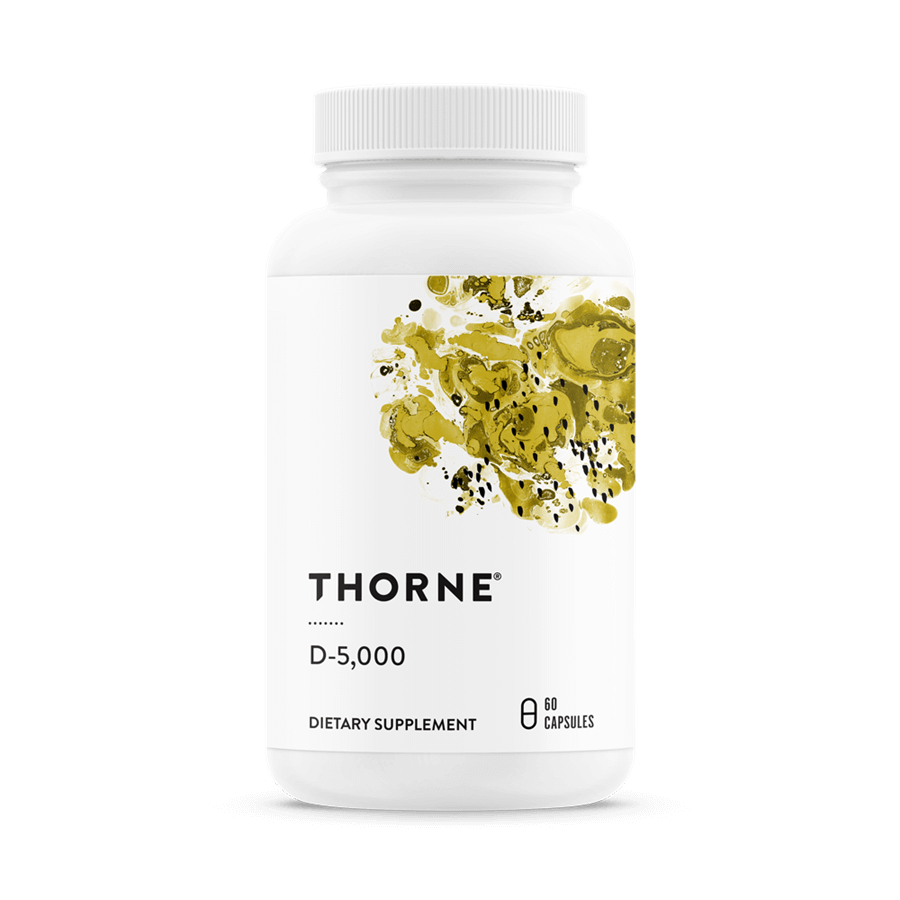
A well-absorbed vitamin D3 supplement delivering 5,000 IU per capsule, designed to support bone, teeth, and muscle health, immune function, and healthy brain and mood balance.



10% off all supplements
Use code at checkout
MARTYROSS10


Opens Femologist.com in a new tab
TreatLyme and Dr. Marty Ross, MD, are affiliated with Femologist. We may earn a commission on purchases made through this link or code.
Quick Facts
Key Ingredients
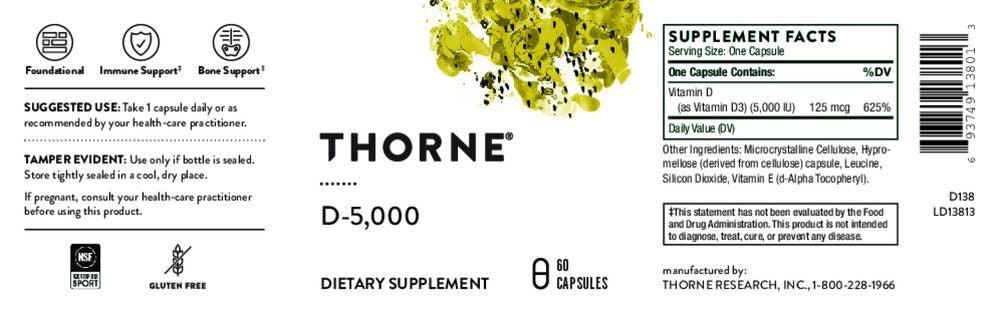
Vitamin D 125 mcg (5,000 IU)
Third-party Testing

NSF Certified for Sport
Dietary

Dairy-free

Derived from natural colors

Derived from natural flavors

Gluten-free

Soy-free

Written by

Dr. Marty Ross, MD
Updated
September 24, 2026
Dr. Ross's Expert Review
D-5000 is straightforward vitamin D3 at 5,000 IU per capsule from Thorne. I like it because the form is clean and well absorbed. Plus Thorne holds this product to NSF Certified for Sport testing standards, which means what is on the label is in the bottle.
Vitamin D works in the body as a hormone-like agent, and it affects most major systems. In my practice I pay attention to it for bones and teeth, muscle function, immune balance, mood, and energy. The D3 form matters. Research shows D3 is more potent and better absorbed than D2, and it does a better job raising and maintaining healthy blood levels.
How do I use it? I dose it to the blood levels. My goal is 50 to 80 ng/mL. I have physicians check a 25-hydroxy vitamin D level, start 5,000 IU a day when it is low or borderline, and recheck after a few months before deciding the long-term maintenance amount. Vitamin D is fat soluble, so more is not automatically better, and the right amount is based on individual factors.
One practical pairing question comes up often: vitamin K2. Vitamin D3 enhances calcium absorption and retention, while K2 helps direct calcium toward bones and teeth and away from soft tissues. For many people on daily vitamin D, K2 is a reasonable companion, and your physician can tell you if it fits your plan.
Safety is simple here. If you are pregnant, review it with your physician first. And do not guess your dose from a forum thread. Get the blood test.
These statements have not been evaluated by the Food and Drug Administration. This product is not intended to diagnose, treat, cure, or prevent any disease. Dr. Ross has a financial relationship with the Femologist store, where this product is sold.
How I Use It in My Practice
In my practice D-5000 is a product I suggest for ongoing support. I dose based on blood levels aiming for a level of 50 to 80 ng/mL in my patients with chronic complex illnesses. For most people I suggest 5,000 IU a day and recheck after a few months before setting the long-term amount. I do not start someone at high doses without getting a blood level first. I have people take it with a meal, since it absorbs better with fat. Pregnancy means a physician conversation first.
This reflects Dr. Ross's clinical experience and is educational, not medical advice. Work with your treating physician before starting, stopping, or changing any supplement or medication.
The Research, in Dr. Ross's Words
In my review of the Vit D research, the strongest evidence for vitamin D is when Vit D levels are low primarily for bone health and calcium regulation, with cognitive, neurologic, hormonal and immune effects still emerging. A 2025 double-blind trial in children found D3 supplementation improved vitamin D status, with signals in cognitive function and immune markers. A 12-month randomized trial in older adults with mild cognitive impairment found supplementation improved cognitive function, with the authors pointing to reduced oxidative stress. A 2024 narrative review goes further, framing vitamin D as a lifespan neuroimmune signal relevant to cognitive health.
The children trial is strong on status improvement but the cognitive findings are secondary signals, not the primary endpoint. The MCI trial is encouraging but small in scope, and mild cognitive impairment is not the same as everyday brain fog experienced by those living with complex chronic illnesses. The 2024 paper is a narrative review, which means the author is interpreting the field rather than testing a hypothesis. Where these papers agree is that D3 raises vitamin D levels reliably, and that those levels matter for brain and immune function. The data for other benefits is limited or does not exist.
References
From:
Thorne
Get the vitamin that supports healthy teeth, bones, and muscles, as well as cardiovascular and immune function. Vitamin D, in its D3 form, is more potent and better absorbed than its D2 form. Thorne's vitamin D supplements contain no lactose and no preservatives. NSF Certified for Sport®
Directions of Use
Take 1 capsule daily or as recommended by your health-care practitioner.
Does not contain
dairy
gluten
soy
ALLERGY WARNING: This product is contraindicated in an individual with a history of hypersensitivity to any of its ingredients. PREGNANCY: If pregnant, consult your health-care practitioner before using this product. INTERACTIONS: There are no known adverse interactions or contraindications at publication date.
Excerpted from Thorne's product information. These statements have not been evaluated by the Food and Drug Administration.
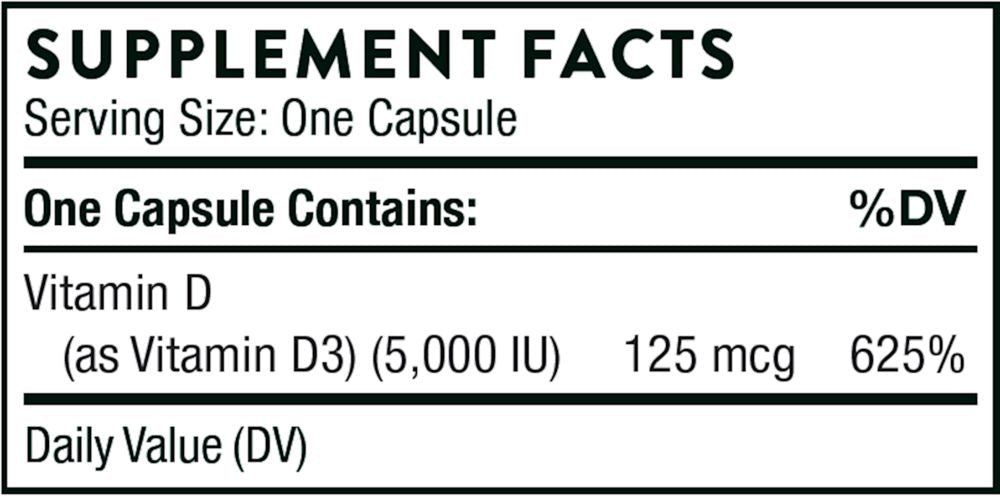
Supplement Facts
Serving Size: 1 Capsule
Servings Per Container: 60
| One Capsule Contains | Amount | |
|---|---|---|
Vitamin D as Vitamin D3 | 125 mcg (5,000 IU) | |
Common Questions about D-5000
Answers are general educational information, not medical advice for your situation.
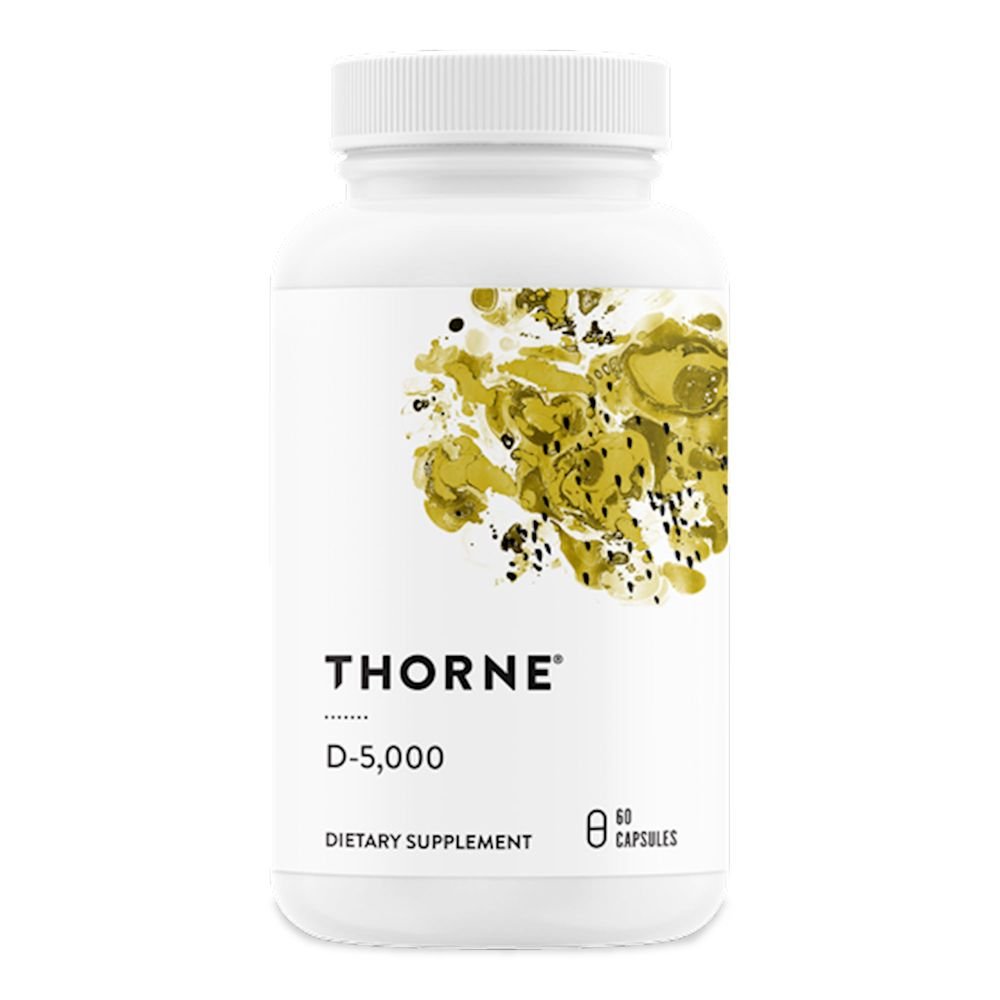
D-5000
By Thorne
From $19.00 · Save 10% with code MARTYROSS10



Magnesium Glycinate
Mineral support often paired with vitamin D in the same daily routine.