

ongoing support
Nervous System & Stress
Pain Support
A standardized butterbur root extract softgel delivering 7.5 mg petasins per serving, made to support healthy blood vessel relaxation in the head and daily comfort.



10% off all supplements
Use code at checkout
MARTYROSS10


Opens Femologist.com in a new tab
TreatLyme and Dr. Marty Ross, MD, are affiliated with Femologist. We may earn a commission on purchases made through this link or code.
Quick Facts
Key Ingredients
Purple Butterbur (Petasites hybridus) (Petadolex brand) Root Extract 50 mg
Third-party Testing
Dietary

Dairy-free

Written by

Dr. Marty Ross, MD
Updated
November 2, 2026
Dr. Ross's Expert Review
Petadolex is a standardized butterbur extract, and the standardization matters. Purple butterbur root, Petasites hybridus, contains petasins, and this product is made to deliver a consistent 7.5 mg of petasin and isopetasin per softgel. I care about consistency in botanicals. Whole herb products vary batch to batch. A standardized extract does not.
The other thing I care about is what was removed. Raw butterbur naturally carries pyrrolizidine alkaloids, compounds that are hard on the liver. Petadolex uses a patented extraction method that keeps the valuable petasins while removing those compounds. That is why I am comfortable with this particular brand and not generic butterbur.
The suggested use follows a stepped pattern. One softgel three times daily for the first four weeks, then one softgel twice daily after that. It is built for ongoing use rather than a short course.
Research interest in butterbur centers on healthy blood vessel relaxation in the brain and on calming pathways the body uses when the head feels strained. Early clinical trials reported improvements in head comfort, though the evidence base is aging. The clinical trials on the 150 mg per day dose are what drew attention to this extract in the first place.
This product should not be used during pregnancy or nursing, or with a liver disorder. Anyone on prescription medication should review it with their physician first. If abdominal pain, dark urine, or jaundice appear, the manufacturer says to discontinue use and contact a healthcare professional. Rare liver concerns have been reported with butterbur products, which is exactly why the PA-free extraction and physician oversight matter.
These statements have not been evaluated by the Food and Drug Administration. This product is not intended to diagnose, treat, cure, or prevent any disease. Dr. Ross has a financial relationship with the Femologist store, where this product is sold.
How I Use It in My Practice
I use this product for people who need steady head comfort support as part of a larger plan. The pattern I follow is the one on the label. One softgel three times daily for the first four weeks, then one twice daily. It is a softgel and it should be swallowed whole, not chewed. I review liver status before anyone starts, because butterbur products carry that caution, and I use this PA-free extract specifically. I also screen for pregnancy, nursing, and prescription medications first. I give it a fair trial of a few months before judging whether it belongs in the plan.
This reflects Dr. Ross's clinical experience and is educational, not medical advice. Work with your treating physician before starting, stopping, or changing any supplement or medication.
The Research, in Dr. Ross's Words
The strongest source here is a 2022 narrative review in Frontiers in Neurology. It lays out how petasins, the active compounds in Petasites hybridus, work: they inhibit COX-2 and inflammatory mediators, and they act on TRPA1 and TRPV1 channels involved in head pain pathways. The review also covers the safety question, including why PA-free extraction matters for any butterbur product a person actually takes.
Two good-quality clinical trials have investigated Petadolex® for migraine prevention. In the pivotal Lipton et al. trial, 75 mg twice daily cut monthly attack frequency by ~45% (vs 28% for placebo), with a 68% responder rate (vs 49%); the 50 mg dose was no better than placebo, and a separate study found 150 mg/day, but not 100 mg/day, superior to placebo (48% vs 26% reduction). (On this evidence, the AAN/AHS assigned butterbur Level A, though only PA-free extracts should be used given hepatotoxicity concerns. The AAN/AHS rating was withdrawn later due to the hepatotoxicity safety concerns.)
My honest read: the mechanism work is solid and the trials were positive, but the evidence base is aging, several trials date from the 1990s and 2000s, and safety review has changed how this ingredient is used. The two sources also differ in tone, one emphasizing mechanism and promise, the other weighing cautions more heavily. I treat it as a useful option with real cautions, not a casual supplement.
References
From:
Integrative Therapeutics
The patented method of extraction for Petadolex® ensures the valuable petasites compounds are captured, while leaving out toxic levels of inherent compounds such as pyrrolizidine alkaloids. Petadolex® is distributed by Integrative Therapeutics® under license from Weber & Weber.
Directions of Use
Adults swallow 1 softgel three times daily. Do not bite or chew.
Does not contain
dairy
salt
soy
wheat
Do not use if you are pregnant, nursing, or have a liver disorder. If you are taking any medications, consult a healthcare professional before use. Discontinue use and consult a healthcare professional if you develop symptoms of liver trouble, such as abdominal pain, dark urine, or jaundice. Keep out of reach of children. Safety sealed with inner seal. Do not use if seal is broken or missing. Keep tightly closed. Store at room temperature. Avoid excessive heat and direct sunlight. Free of harmful levels of pyrrolizidine alkaloids (PAs).
Excerpted from Integrative Therapeutics's product information. These statements have not been evaluated by the Food and Drug Administration.
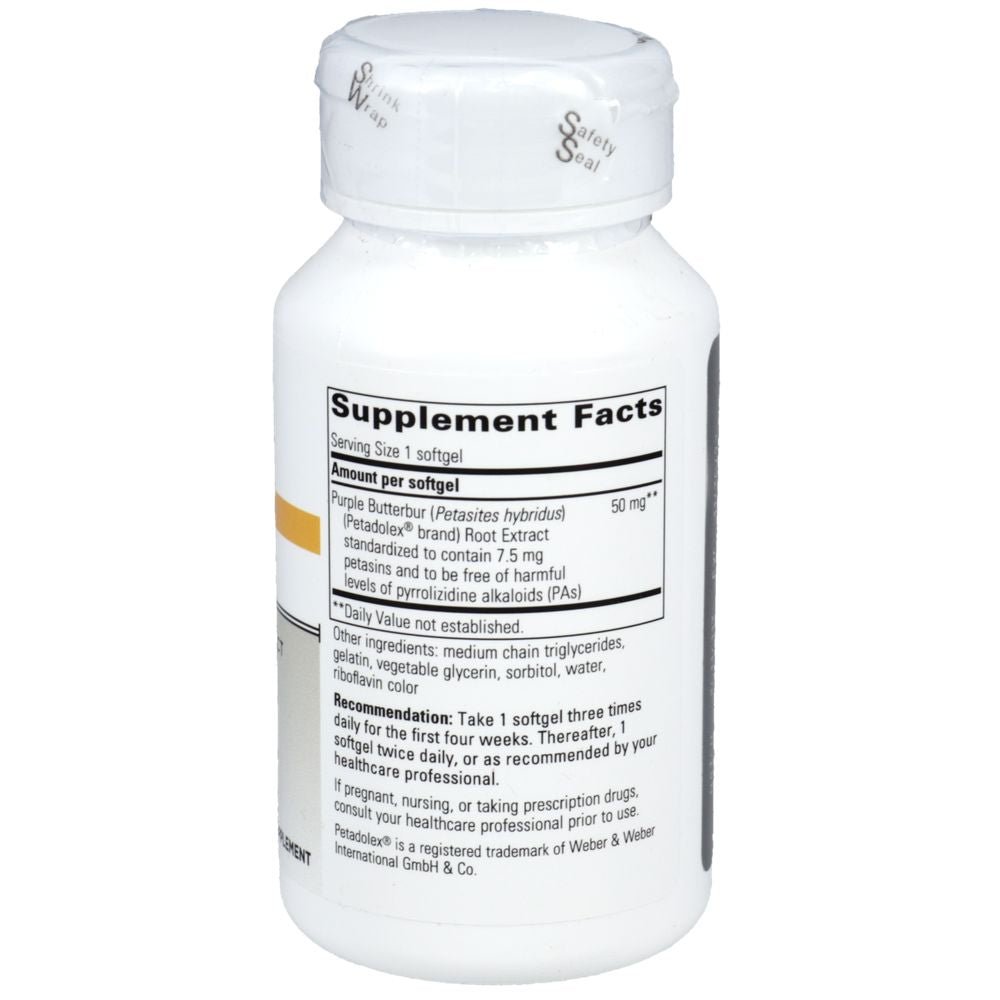
Supplement Facts
Serving Size: 1 Softgel
Servings Per Container: 60
| Amount Per Serving | Amount | |
|---|---|---|
Purple Butterbur (Petasites hybridus) (Petadolex brand) Root Extract standardized to contain 7.5 mg petasins and to be free of harmful levels of pyrrolizidine alkaloids (PAs) | 50 mg | |
†Daily Value not established. | ||
Common Questions about Petadolex
Answers are general educational information, not medical advice for your situation.
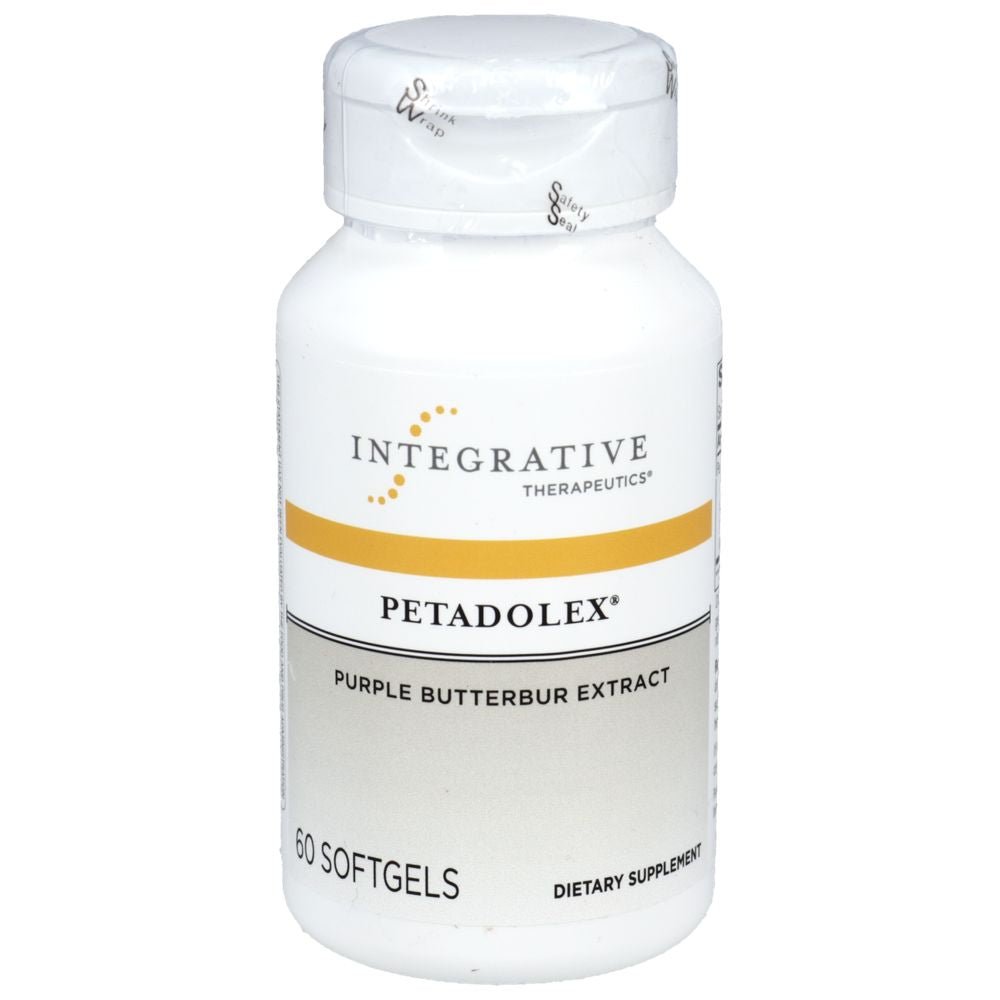
Petadolex
By Integrative Therapeutics
From $59.75 · Save 10% with code MARTYROSS10