
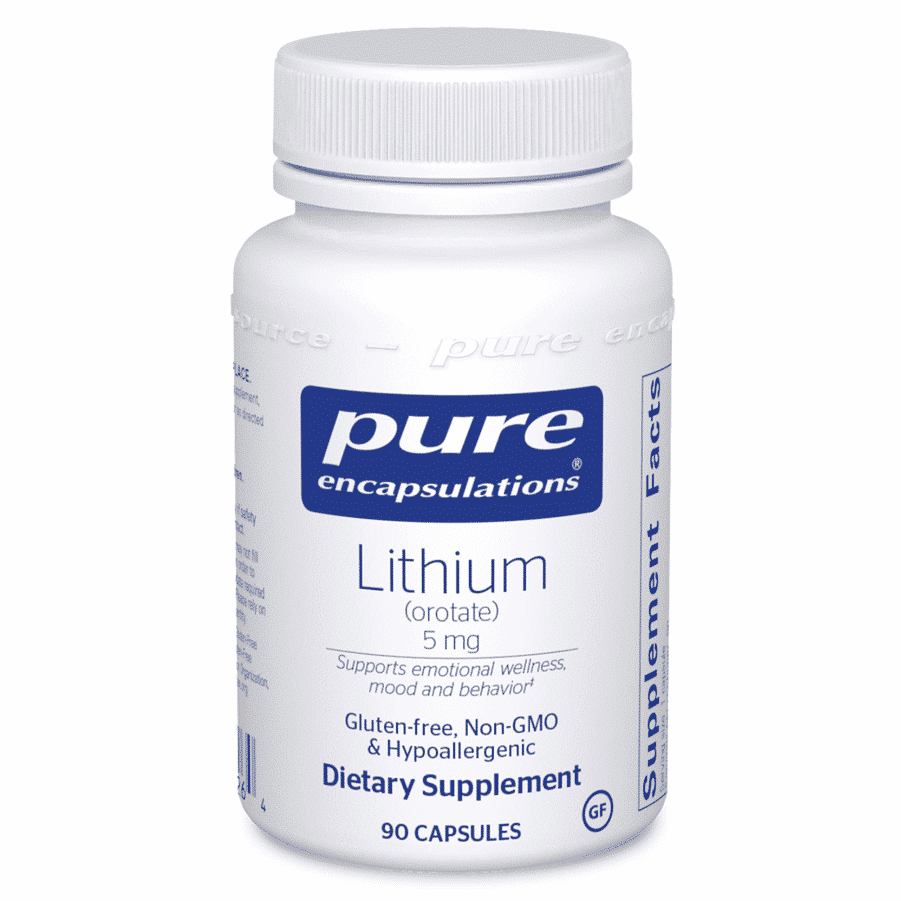

ongoing support
Mood & Focus
Nervous System & Stress
A low-dose lithium orotate supplement with added NAC and ascorbyl palmitate, formulated to support healthy mental function, including mood, memory, and behavior, as part of ongoing nervous system care.



10% off all supplements
Use code at checkout
MARTYROSS10


Opens Femologist.com in a new tab
TreatLyme and Dr. Marty Ross, MD, are affiliated with Femologist. We may earn a commission on purchases made through this link or code.
Quick Facts
Key Ingredients
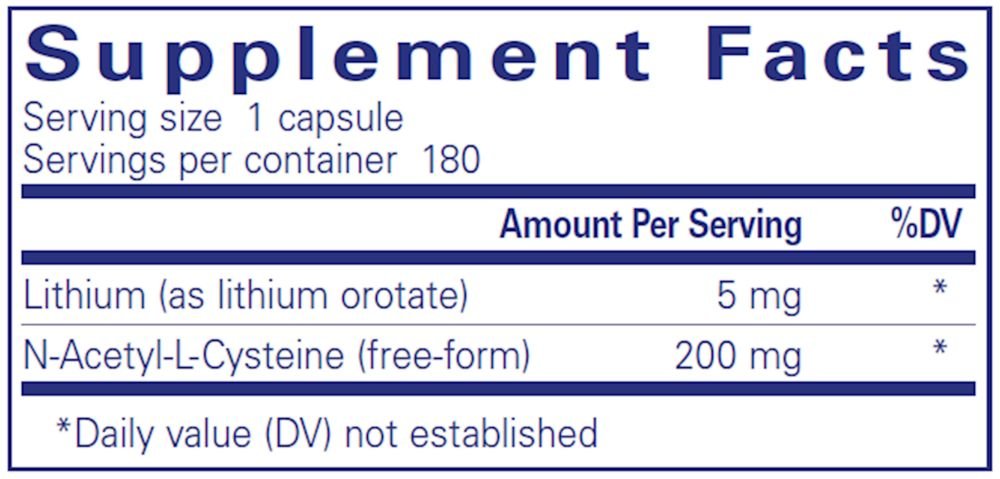
Lithium 5 mg
N-Acetyl-L-Cysteine (free-form) 200 mg
Third-party Testing
Dietary

Gluten-free

Non-GMO

Vegetarian

Written by

Dr. Marty Ross, MD
Updated
September 24, 2026
Dr. Ross's Expert Review
Lithium orotate is a salt form of lithium that the body absorbs readily. Prescription lithium has a long history in psychiatric medicine. My interest here is entirely the low-dose supplement form, which works differently. At 5 mg per capsule this product gives you a chance to try lithium support in genuinely small amounts.
In my practice, low-dose lithium orotate is one of my favorite supplements for nervous system support. Many people with chronic illness deal with irritability of the nervous system, a sense of buzzing or jitteriness, and sensitivities to sound, touch, or light. I also reach for it when memory and mental clarity need steady support. Lithium supports healthy brain function, and it helps the brain’s own detox pathways, including natural detoxification enzymes like glutathione S-transferase.
A detail worth knowing about this specific product: the formula also includes N-acetyl-L-cysteine and ascorbyl palmitate alongside the lithium. So each capsule supports the brain from a few angles at once.
The research data-base has limits. The low-dose research base is thinner than what exists for prescription lithium. I keep this in mind as I recommend lithium orotate at 5mg for gentle ongoing support. It works best inside a full plan that looks at sleep, inflammation, and the rest of the nervous system picture.
The label directs 1 capsule per day with a meal. In my own guide I go further: 5 mg 3 times a day, 15 mg total, a dose I find gentle and well tolerated, still a fraction of prescription lithium dosing. If you go above the label dose, do it with the help of your physician. Do not use this if you are pregnant or nursing, and if you take medications, especially anything affecting mood or the kidneys, review it with your health care provider first. If you notice an adverse reaction, stop it and call your provider.
These statements have not been evaluated by the Food and Drug Administration. This product is not intended to diagnose, treat, cure, or prevent any disease. Dr. Ross has a financial relationship with the Femologist store, where this product is sold.
How I Use It in My Practice
I use lithium orotate 5 mg as ongoing nervous system support. The label dose is one capsule a day with a meal, and that is where most people start. My guide discusses amounts used in practice, but any dosing above the label should happen only with your physician directing it. I reach for it most when someone describes buzzing, jitteriness, or sensory sensitivity, or when mental clarity needs steady support. I pair it with the rest of my protocol, sleep work first, and I never use it in someone who is pregnant or nursing or who takes medications without their physician weighing in.
This reflects Dr. Ross's clinical experience and is educational, not medical advice. Work with your treating physician before starting, stopping, or changing any supplement or medication.
The Research, in Dr. Ross's Words
The low-dose lithium orotate literature is thin but real. Reviews ask whether orotate has any role in psychiatry at all, and small human studies show low-dose lithium supplementation reaches the brain and influences GSK3beta, one of lithium’s known targets. None of these studies test this exact product for the nervous system support I use it for. Prescription lithium carries the deep evidence base; this supplement form does not. That is a gap I keep in mind, which is why I recommend physician oversight when a person uses this product.
References
From:
Pure Encapsulations
Offers the essential trace element lithium to support healthy mental function, including mood, emotion, memory and behavior‡
Benefits & Features
• Supports mood, emotional wellness and behavioral health‡
• Supports cognitive function‡
• Promotes neurotransmitter activity‡
• Combination of lithium and N-acetyl-l-cysteine (NAC)
• Part of the PureSYNAPSE™ product line
• Made with high-quality ingredients backed by verifiable science
Directions of Use
As a dietary supplement, take 1 capsule daily, with a meal, or as directed by a health professional.
Does not contain
dairy
eggs
gluten
peanuts
preservatives
soy
Not to be taken by pregnant and lactating women. Consult your health professional before using this product. Not to be taken in conjunction with antidepressants unless advised by a health professional. Individuals with bipolar disorder and depression must be monitored closely by a health professional if taking this supplement. It is recommended that individuals taking this supplement have lithium levels and kidney function monitored regularly. Do not exceed the dose recommended by your health professional.
Store in a cool, dry place.
Excerpted from Pure Encapsulations's product information. These statements have not been evaluated by the Food and Drug Administration.
Supplement Facts
Serving Size: 1 Capsule
Servings Per Container: 180
| Amount Per Serving | Amount | |
|---|---|---|
Lithium as lithium orotate | 5 mg | |
N-Acetyl-L-Cysteine (free-form) | 200 mg | |
Ascorbyl Palmitate (fat-soluble vitamin C) | 20 mg | |
Common Questions about Lithium Orotate
Answers are general educational information, not medical advice for your situation.
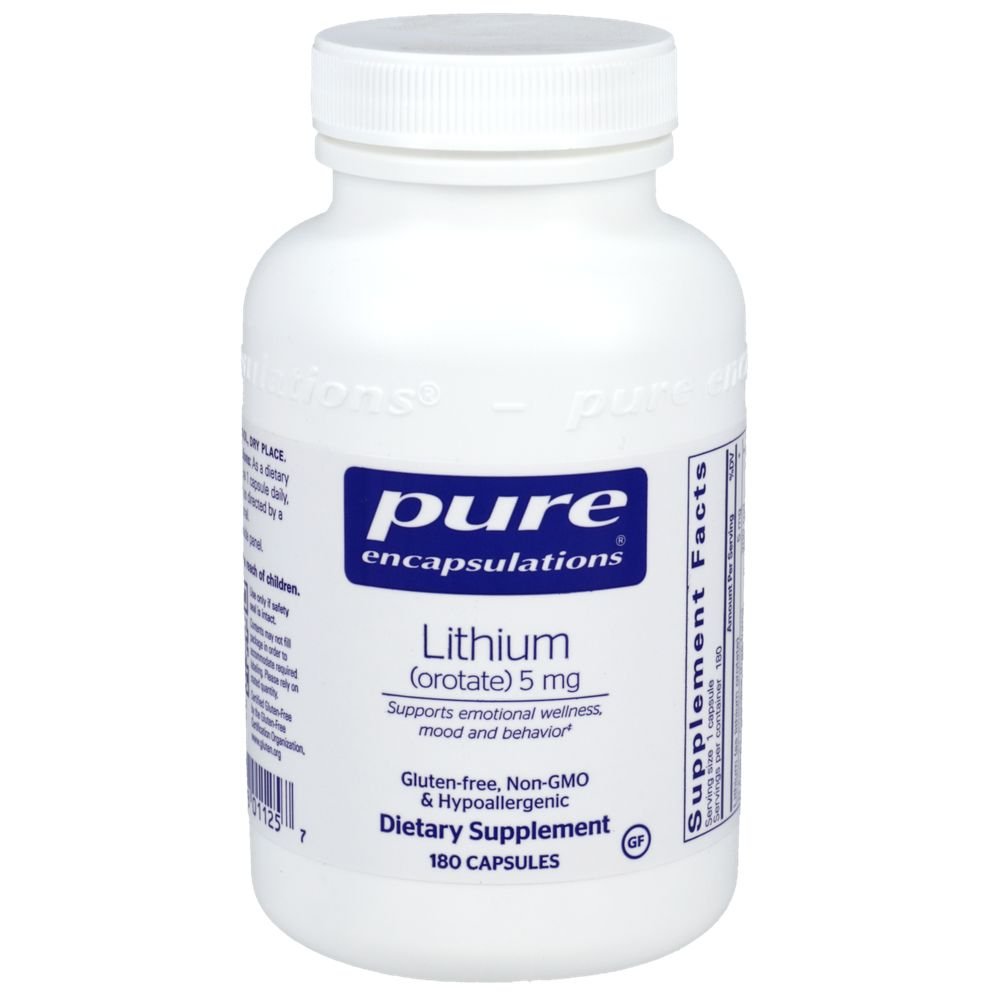
Lithium Orotate
By Pure Encapsulations
From $41.00 · Save 10% with code MARTYROSS10


Guide
Lithium Orotate 5 mg
My dedicated lithium orotate guide covering how I use it in practice.

Guide
Depression & Anxiety: Basic Approaches and Natural Medicines
Depression and anxiety guide that includes lithium orotate dosing.
Guide
Tremor Support—A Lyme Byte
Tremor guide that lists lithium orotate as a key support supplement.