


ongoing support
Candida & Yeast Balance
Gut & Digestive Health
Infection Support
Capriplus is an enteric-coated herbal combination from Karuna with caprylic acid, garlic, and oil of oregano that supports a healthy balance of intestinal yeast and microbes and promotes digestive comfort.



10% off all supplements
Use code at checkout
MARTYROSS10


Opens Femologist.com in a new tab
TreatLyme and Dr. Marty Ross, MD, are affiliated with Femologist. We may earn a commission on purchases made through this link or code.
Quick Facts
Key Ingredients
Vitamin E 0.408 mg
Pantothenic Acid 4 mg
Third-party Testing
Dietary

Written by

Dr. Marty Ross, MD
Updated
September 24, 2026
Dr. Ross's Expert Review
Capriplus is one of my go-to formulas for intestinal yeast balance. Karuna built it around caprylic acid, sorbic acid, odorless garlic, and oil of oregano, with vitamin E and a base of minerals. Each of those ingredients has a long history of use for microbial balance, and together they cover both the yeast and fungal forms of organisms like Candida albicans.
Where it fits
Yeast overgrowth is a a very common gut problem I see. Bloating, digestive discomfort, and food sensitivities often trace back to an intestinal environment that has drifted out of balance. I use Capriplus as the yeast-balance arm of a broader gut approach that also includes diet changes, prebiotics, and probiotics. One tablet design point matters here: the tablets are enteric coated, so the ingredients release in the intestines, where they do their work, rather than dissolving in the stomach.
The research
Laboratory studies show caprylic acid inhibits both the yeast and mycelial forms of Candida albicans and interferes with its adhesion and biofilm formation. A mouse study found that dietary medium-chain fatty acids reduced intestinal colonization by Candida. Sorbic acid has known antimicrobial activity as well. I am candid about the limits: most of this is laboratory and animal work, not large human trials of the combination.
How I approach dosing
Two tablets twice a day on an empty stomach is my usual starting dose. I watch for die-off, which shows up as fatigue, bloating, or brain fog when yeast levels fall quickly. When that happens, I slow down. This is not for pregnancy or nursing without a physician’s guidance, and anyone with a known sensitivity to an ingredient should skip it.
The bottom line
No single product fixes yeast balance. Diet, prebiotics, probiotics, and patience do the heavy lifting. Capriplus is a well-built combination that makes that work easier.
These statements have not been evaluated by the Food and Drug Administration. This product is not intended to diagnose, treat, cure, or prevent any disease. Dr. Ross has a financial relationship with the Femologist store, where this product is sold.
How I Use It in My Practice
In my practice, Capriplus is part of a system, never a stand-alone. I start most people at 2 tablets twice a day on an empty stomach and keep it in place for several weeks to a few months, depending on how the gut responds. When die-off reactions appear, I slow the pace rather than push through. I pair it with a low-sugar diet and add prebiotics and probiotics. I reassess at each visit rather than leaving people on it indefinitely. Generally, two to three month regimens are my usual course. If someone is pregnant or nursing, or has a known sensitivity to an ingredient, I have them review it with their physician first.
This reflects Dr. Ross's clinical experience and is educational, not medical advice. Work with your treating physician before starting, stopping, or changing any supplement or medication.
The Research, in Dr. Ross's Words
The science behind Capriplus rests on its individual ingredients, mostly in laboratory work. Caprylic acid has the strongest research file. In vitro studies show it inhibits both the yeast and mycelial forms of Candida albicans at low concentrations, and a 2017 study found it interferes with virulence factors, including morphogenesis, adhesion, and biofilm formation, by affecting the yeast-to-hyphal switch. Those are the exact processes that make yeast hard to manage, so the mechanism fits the use.
There is one animal study worth noting. Dietary coconut oil, which is rich in medium-chain fatty acids including caprylic acid, reduced gastrointestinal colonization by Candida albicans in mice. That is encouraging, and it is a mouse study, not a human trial of this tablet.
Sorbic acid has documented antimicrobial activity as a preservative, with the effect depending on pH. That is laboratory chemistry more than clinical evidence.
In my read of this research, caprylic acid carries the weight here, the supporting ingredients have plausible but thinner research profiles, and none of it tests the actual Capriplus combination in people. I use it based on mechanism, the ingredient-level data, and what I see in practice, and I tell patients the human evidence is limited.
References
From:
Karuna
Caprylic acid and sorbic acid are fatty acids demonstrated to control both the yeast and fungal forms of this organism. Odorless garlic is included for its widely-researched anti-fungal properties. Oil of oregano contains a complex mixture of highly active terpenoids and phenolic compounds known to exert strong antimicrobial activity. Importantly, CapriPlus tablets are enterically coated for optimal intestinal release and patient compliance.
Directions of Use
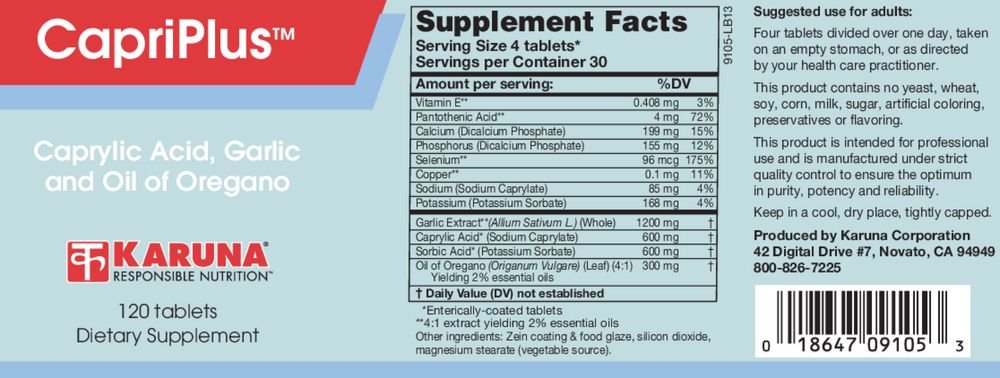
Suggested use for adults: Four tablets divided over one day, taken on an empty stomach, or as directed.
Does not contain
artificial-colors
artificial-flavors
corn
dairy
preservatives
salt
soy
sugar
wheat
yeast
If pregnant or nursing, consult your health care professional before use. This product is contraindicated in an individual with a history of hypersensitivity to any of its ingredients.
Excerpted from Karuna's product information. These statements have not been evaluated by the Food and Drug Administration.
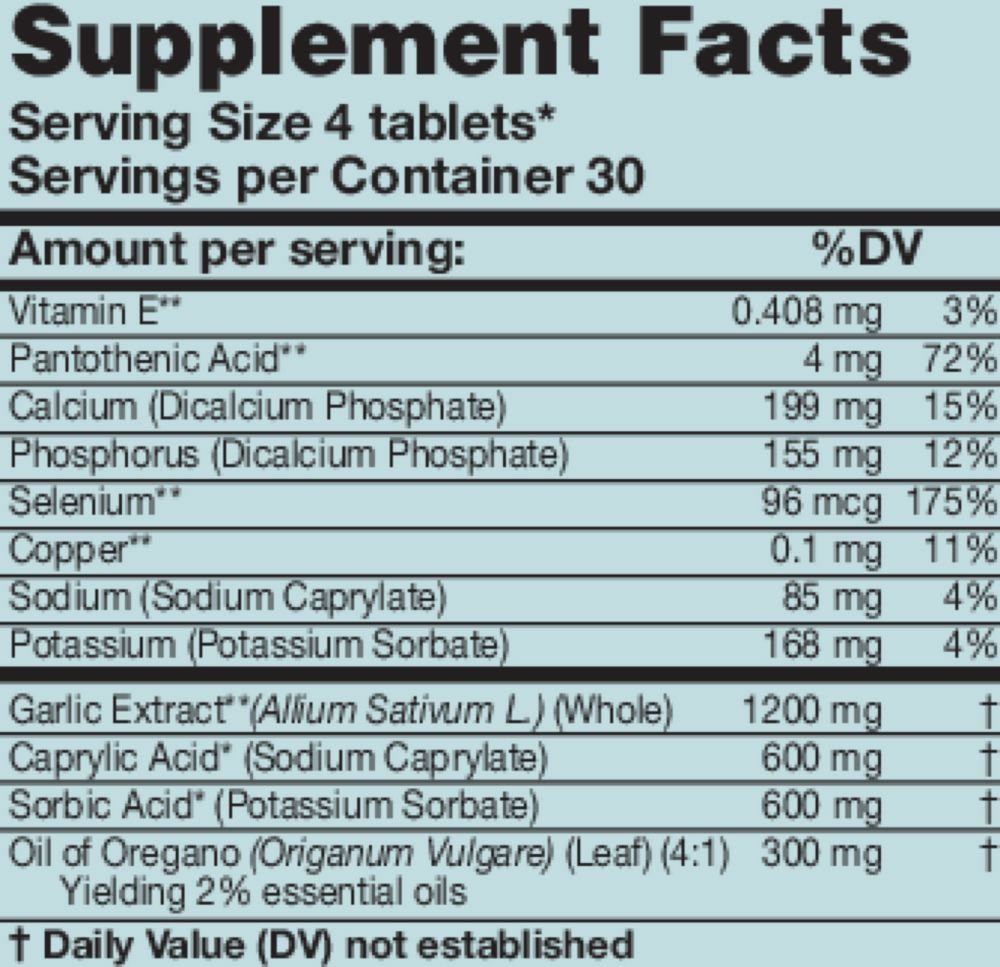
Supplement Facts
Serving Size: 4 Tablets*
Servings Per Container: 30
| Amount Per Serving | Amount | |
|---|---|---|
Vitamin E | 0.408 mg | |
Pantothenic Acid | 4 mg | |
Calcium (Dicalcium Phosphate) | 199 mg | |
Phosphorus (Dicalcium Phosphate) | 155 mg | |
Selenium | 96 mcg | |
Copper | 0.1 mg | |
Sodium (Sodium Caprylate) | 85 mg | |
Potassium (Potassium Sorbate) | 168 mg | |
Garlic Extract (Allium sativum L.) (Whole) | 1200 mg | |
Caprylic Acid (Sodium Caprylate) | 600 mg | |
Sorbic Acid (Potassium Sorbate) | 600 mg | |
Oil of Oregano (Origanum Vulgare) (Leaf) (4:1) | 300 mg | |
* Enterically-coated tablets
** 4:1 extract yielding 2% essential oils
† Daily Value (DV) not established | ||
Common Questions about Capriplus
Answers are general educational information, not medical advice for your situation.
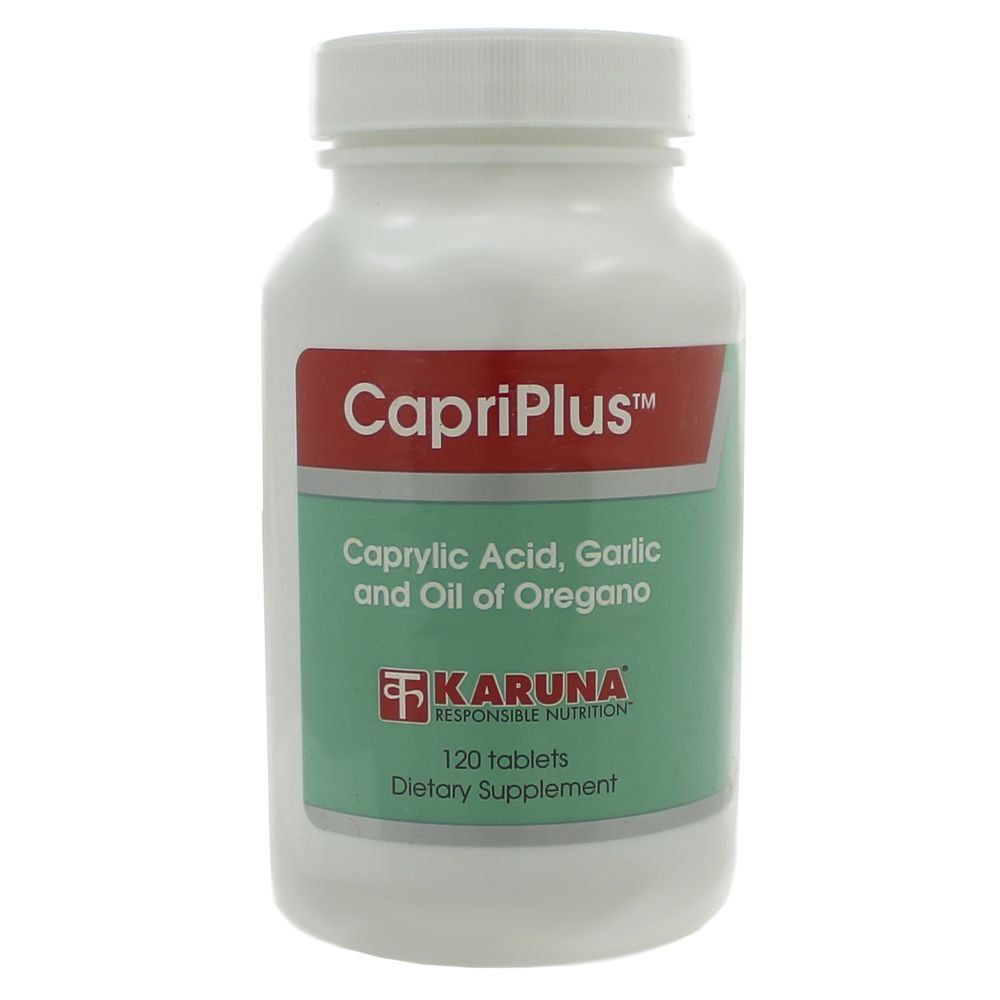
Capriplus
By Karuna
From $48.40 · Save 10% with code MARTYROSS10


Guide
Kills & Prevents Yeast: A Brief Guide
Marty's core guide on balancing intestinal yeast

Guide
Action Guide—Medicine Hyper-reactivity & Sensitivity
Guide to managing reactions to herbs and medicines
Guide
Lyme Protocol
The full Ross protocol, including yeast prevention steps