

ongoing support
Gut & Digestive Health
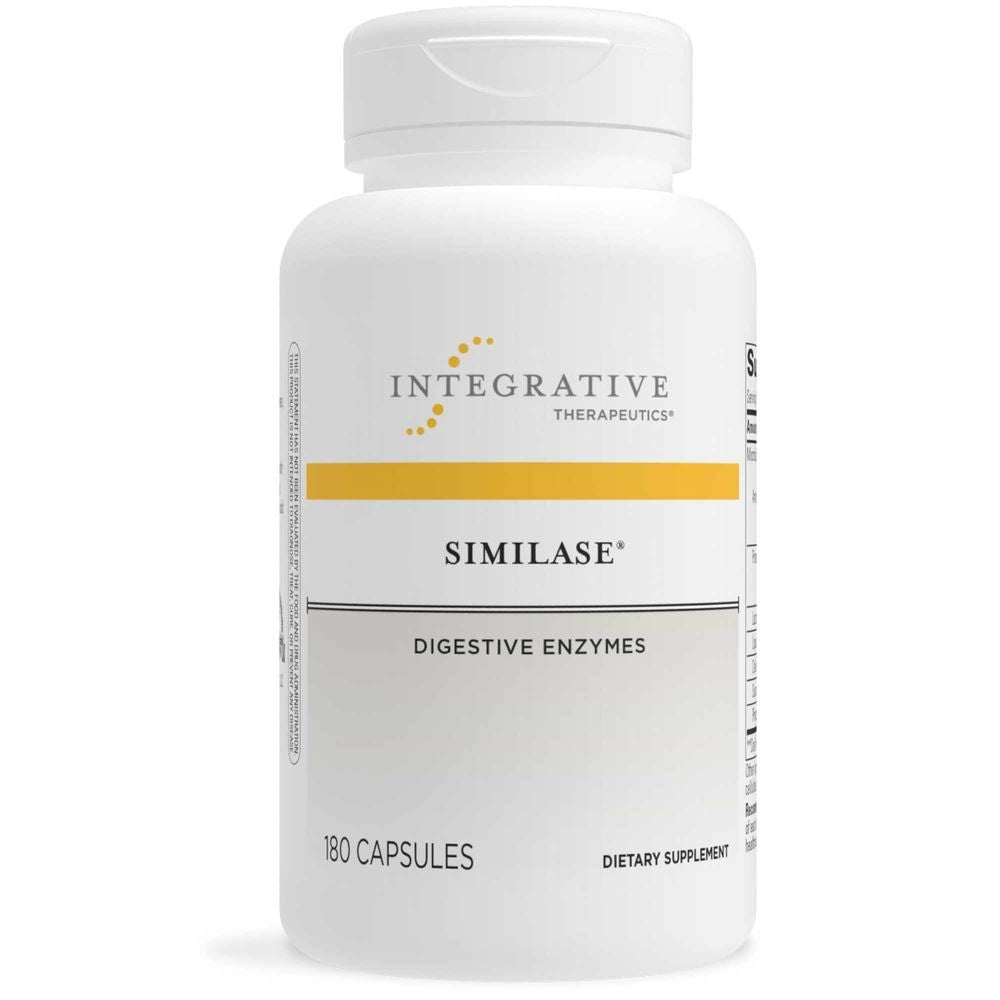
Plant-based blend of digestive enzymes from Integrative Therapeutics covering carbohydrates, proteins, fats, fibers, and sugars across a broad pH range. Dairy-free and vegan capsules for daily digestive support.



10% off all supplements
Use code at checkout
MARTYROSS10


Opens Femologist.com in a new tab
TreatLyme and Dr. Marty Ross, MD, are affiliated with Femologist. We may earn a commission on purchases made through this link or code.
Quick Facts
Key Ingredients
Microbial Enzymes 563 mg
Amylase (USP (pH 6.8)) 21,288 USP
Third-party Testing
Dietary

Dairy-free

Written by

Dr. Marty Ross, MD
Updated
September 24, 2026
Dr. Ross's Expert Review
When someone tells me they feel heavy, bloated, or gassy after meals, digestive enzymes are one of the first practical tools I reach for. Similase is a comprehensive proprietary blend of microbial enzymes that covers all the major food types: amylase for carbohydrates, protease for protein, lipase for fat, cellulase for fiber, plus lactase, sucrase, and phytase. What I like is that the enzymes stay active across a broad pH range, so they work in the stomach and continue down the tract.
For people with documented pancreatic insufficiency, enzyme therapy is well established and prescription-strength versions are standard care. For the average person with occasional bloating after big meals, the research is thinner. The studies behind enzyme supplements are mostly in vitro digestion models, pediatric cystic fibrosis care, or animal work. What I see in practice, and what people report in the supplement communities, is fewer complaints when enzymes are taken with meals that would otherwise cause trouble.
The dosing is simple: two capsules at the beginning of each meal, up to three times daily. Timing matters, since the enzymes need to be present when the food is. I am careful with patients who have SIBO, because some people report enzymes make them feel worse rather than better. Anyone pregnant, nursing, diabetic, or on prescription medication should clear using it with their healthcare professional first.
These statements have not been evaluated by the Food and Drug Administration. This product is not intended to diagnose, treat, cure, or prevent any disease. Dr. Ross has a financial relationship with the Femologist store, where this product is sold.
How I Use It in My Practice
I use Similase most for people with bloating, gas, or heaviness after meals, and for anyone whose digestion I want to support while we work on gut balance. Two capsules at the start of a meal is my usual dose, and I focus it on problem meals rather than every meal indefinitely. I watch the SIBO patients closely, because a minority report enzymes worsen symptoms, and when that happens we stop rather than push. Anyone pregnant, nursing, diabetic, or taking prescription drugs should check with their healthcare professional before starting.
This reflects Dr. Ross's clinical experience and is educational, not medical advice. Work with your treating physician before starting, stopping, or changing any supplement or medication.
The Research, in Dr. Ross's Words
I want to be plain about what the enzyme literature does and does not show. The strongest evidence sits in prescription territory: reviews of pancrelipase for exocrine pancreatic insufficiency document real benefit from lipase, protease, and amylase, and a study in children with cystic fibrosis showed that getting enzyme doses matched to the meal actually changes fat, protein, and starch absorption. That is enzyme replacement done carefully, and it proves the principle that enzymes digest food.
The supplement-specific record is thinner. One in vitro study using a simulated digestion model found a commercial enzyme blend improved macronutrient breakdown in complex foods, which supports a plausible working mechanism for its effect. Animal work shows: protease and lipase supplementation changed intestinal morphology in young broilers, and a mouse study found pancreatic enzymes altered intestinal microbiota composition. None of these test Similase itself, and none involve the everyday bloating my patients want help with. In my read, enzymes have a plausible, demonstrated mechanism and limited direct trial evidence for casual use, so I use them where they fit and tell people the evidence has limits.
References
From:
Integrative Therapeutics
Similase is a comprehensive, proprietary blend of digestive enzymes to support the digestion of all food types. Our formula provides comprehensive support for digestion and assimilation of nutrients from the diet. Similase is a proprietary blend of microbial enzymes that are active across a broad pH range in the gastrointestinal tract. As a result, Similase provides support of carbohydrate, protein, fat, and fiber digestion.
Directions of Use
Adults take 2 capsules at the beginning of each meal, up to 3 times daily, or as recommended by a healthcare professional.
Does not contain
artificial-colors
artificial-flavors
dairy
If you are pregnant, nursing, have diabetes, or if you are taking any medications, consult a healthcare professional before use. Keep out of reach of children. Safety sealed with inner seal. Do not use if seal is broken or missing. Keep tightly closed. Store at room temperature. Avoid excessive heat and direct sunlight.
Excerpted from Integrative Therapeutics's product information. These statements have not been evaluated by the Food and Drug Administration.
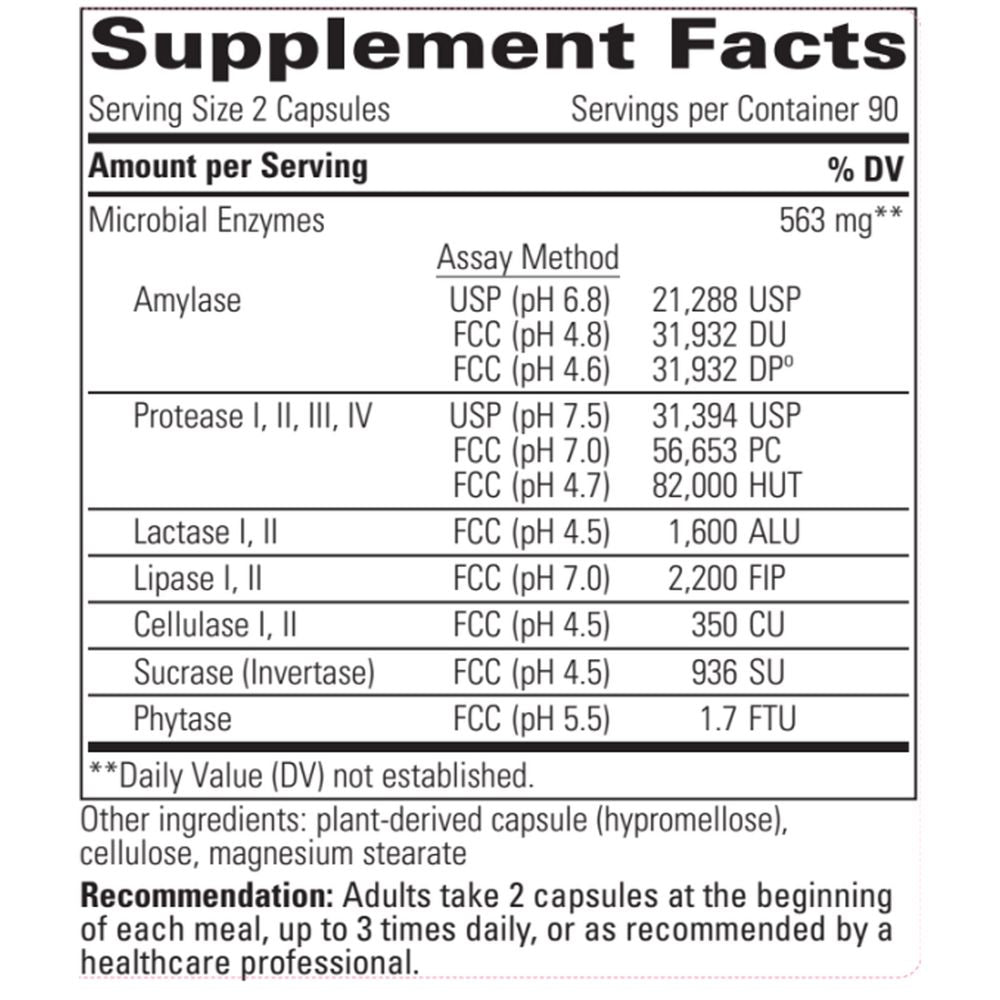
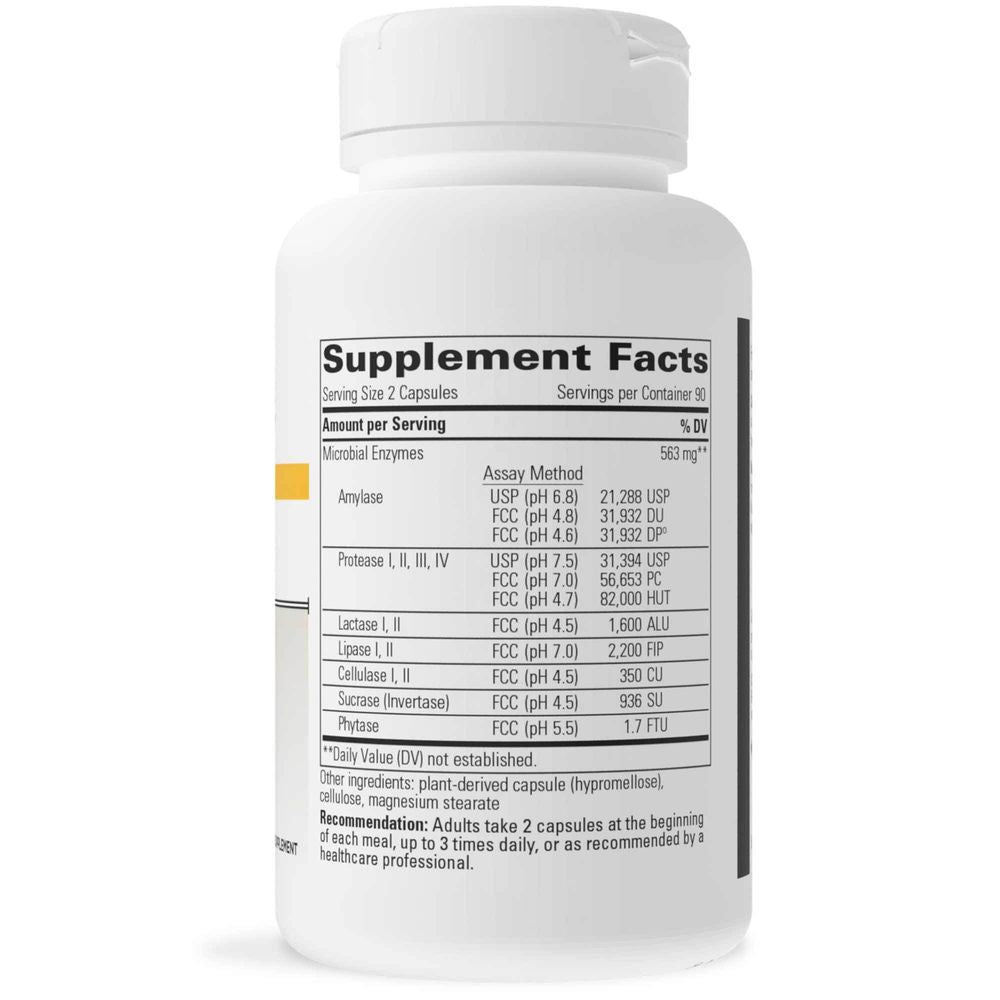
Supplement Facts
Serving Size: 2 Capsules
Servings Per Container: 90
| Amount Per Serving | Amount | |
|---|---|---|
Microbial Enzymes | 563 mg | |
Amylase (USP (pH 6.8)) | 21,288 USP | |
Amylase (FCC (pH 4.8)) | 31,932 DU | |
Amylase (FCC (pH 4.6)) | 31,932 DP° | |
Protease I, II, III, IV (USP (pH 7.5)) | 31,394 USP | |
Protease I, II, III, IV (FCC (pH 7.0)) | 56,653 PC | |
Protease I, II, III, IV (FCC (pH 4.7)) | 82,000 HUT | |
Lactase I, II (FCC (pH 4.5)) | 1,600 ALU | |
Lipase I, II (FCC (pH 7.0)) | 2,200 FIP | |
Cellulase I, II (FCC (pH 4.5)) | 350 CU | |
Sucrase (Invertase) (FCC (pH 4.5)) | 936 SU | |
Phytase (FCC (pH 5.5)) | 1.7 FTU | |
†Daily Value not established. | ||
Common Questions about Similase
Answers are general educational information, not medical advice for your situation.
Similase
By Integrative Therapeutics
From $48.75 · Save 10% with code MARTYROSS10