
short course
Candida & Yeast Balance
Immune Defense
Infection Support
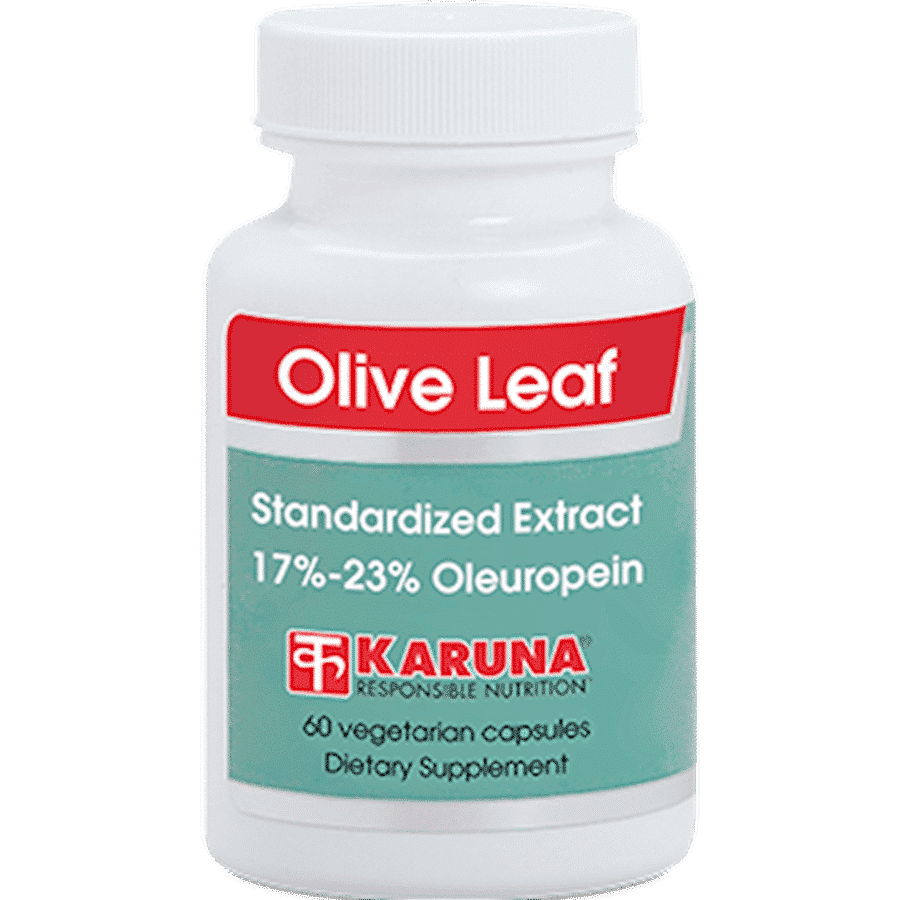
Olive leaf extract from Karuna, delivering 500 mg per vegetarian capsule and standardized to 17-23% oleuropein, a researched polyphenol with antioxidant and antimicrobial activity.



10% off all supplements
Use code at checkout
MARTYROSS10


Opens Femologist.com in a new tab
TreatLyme and Dr. Marty Ross, MD, are affiliated with Femologist. We may earn a commission on purchases made through this link or code.
Quick Facts
Key Ingredients
Olive Leaf Extract (Olea europaea) 500 mg
Third-party Testing
Dietary

Vegetarian

Written by

Dr. Marty Ross, MD
Updated
November 2, 2026
Dr. Ross's Expert Review
Olive leaf extract is one of those remedies I keep coming back to for people who want steady, everyday immune support, or who are interested in the immune-supporting polyphenols studied in lab work on Candida and viruses. The leaf is rich in oleuropein, a bitter polyphenol, and this Karuna formula gives 500 mg per capsule standardized to 17-23% oleuropein. That standardization matters to me. Olive leaf products vary widely, and I want to know what is actually in the bottle.
Most of the research behind olive leaf is lab work. Extracts and oleuropein show antioxidant activity and activity against a range of microbes including Candida and Herpes viruses in the test tube, and one controlled trial in hospitalized patients used a 30% oleuropein preparation. Human research for the way most people actually use olive leaf is thinner. Theory and lab observation suggest value. The clinical literature is still catching up.
In my practice I use olive leaf most for ongoing support, often alongside other immune-oriented supplements rather than as a lone agent. The suggested dose is one capsule twice daily. When someone is new to olive leaf, I usually start at one capsule a day for several days first. Some people notice temporary die-off symptoms when they begin, such as fatigue or headache, which usually settle with a lower dose. If they do not settle, that is a sign to step back and reassess.
Olive leaf is generally well tolerated. The label cautions about use in pregnancy or nursing, and anyone with a history of hypersensitivity to its ingredients should avoid it. I also ask people on prescription medications to review the label with their physician or pharmacist before starting, because olive leaf has been studied for effects on blood pressure and blood sugar, and I want the prescriber in that loop.
These statements have not been evaluated by the Food and Drug Administration. This product is not intended to diagnose, treat, cure, or prevent any disease. Dr. Ross has a financial relationship with the Femologist store, where this product is sold.
How I Use It in My Practice
I use olive leaf extract for ongoing immune support; laboratory research has examined antimicrobial effects of its compounds. I recommend it most often for people who want a standardized polyphenol formula alongside their broader protocol. I like that this one states the oleuropein standard, 17-23%, because generic olive leaf products are a coin flip. For immune support, my usual approach is one capsule a day for the first several days, then the label dose of one capsule twice daily if it agrees. Higher doses are sometimes discussed in practice and should only be considered with your physician. I watch for die-off symptoms at the start, headache and fatigue mostly, and I lower the dose when they show up. I keep it out of pregnancy and review it with the physician first for anyone on blood pressure or blood sugar medication.
This reflects Dr. Ross's clinical experience and is educational, not medical advice. Work with your treating physician before starting, stopping, or changing any supplement or medication.
The Research, in Dr. Ross's Words
The published work on olive leaf extract clusters around two themes: antimicrobial and antioxidant activity, mostly in the lab. Test-tube and cell studies show standardized olive leaf extract and its phenolics, especially oleuropein, acting against a range of bacteria and fungi, and viruses. Cultivar comparisons confirm oleuropein as a major contributor to the extract’s antioxidant activity. In my read of this research, independent groups keep finding the same directions of effect, which I find encouraging, but they are still lab findings.
Olive leaf extract (OLE) and its major polyphenols (oleuropein, hydroxytyrosol) show reproducible antifungal activity against Candida and antiviral activity against herpes simplex virus type 1 (HSV-1), though the evidence is dominated by laboratory (in vitro) work with only limited human data.
References
From:
Karuna
The leaf of the olive tree has been known by traditional herbalists since biblical times. Modern research shows olive leaf contains unique flavonoids including oleuropein, which has several valuable properties for protecting cardiovascular tissues, maintaining normal glucose tolerance, and inhibiting aspects of microbial metabolism. Karuna’s Olive Leaf Extract is standardized for a high 17% to 23% oleuropein content.
Directions of Use
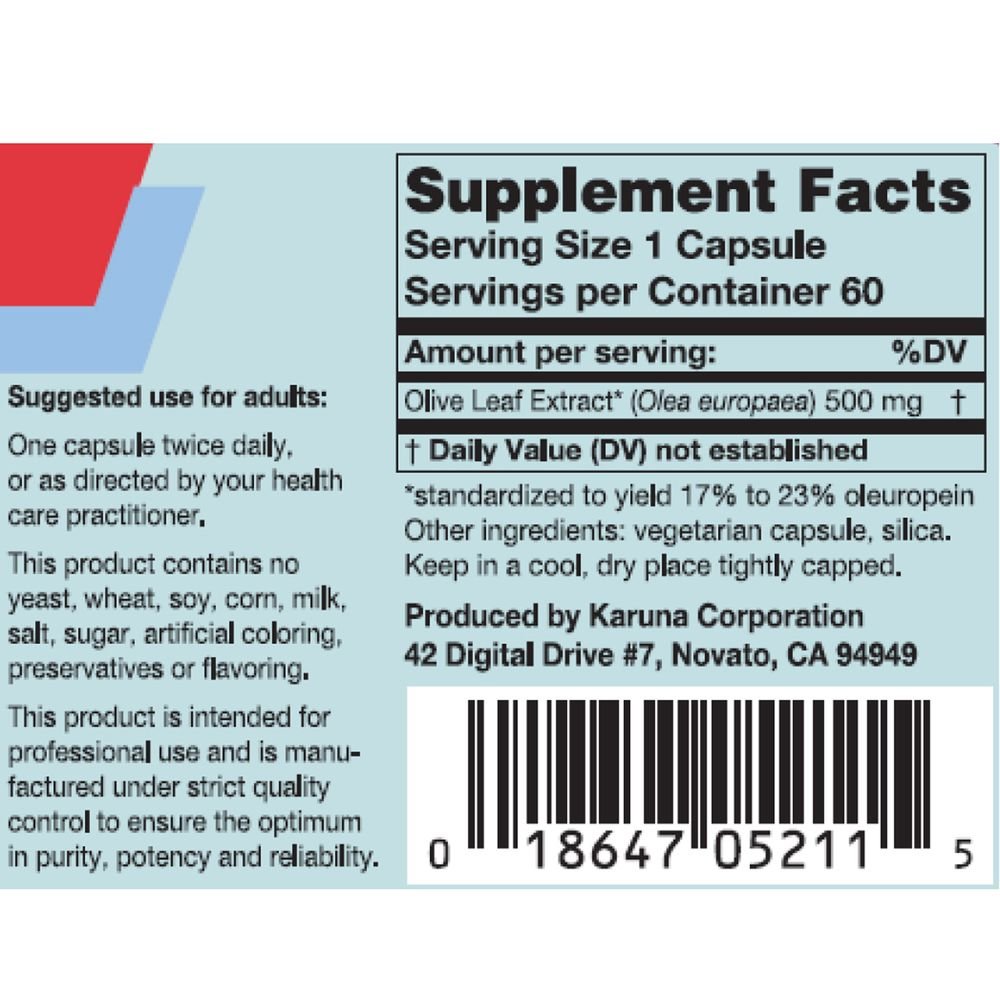
Suggested use for adults: One capsule twice daily, or as directed by your health care practitioner.
Does not contain
artificial-coloring
corn
flavoring
milk
preservatives
salt
soy
sugar
wheat
yeast
If pregnant or nursing, consult your health care professional before use. This product is contraindicated in an individual with a history of hypersensitivity to any of its ingredients.
Excerpted from Karuna's product information. These statements have not been evaluated by the Food and Drug Administration.
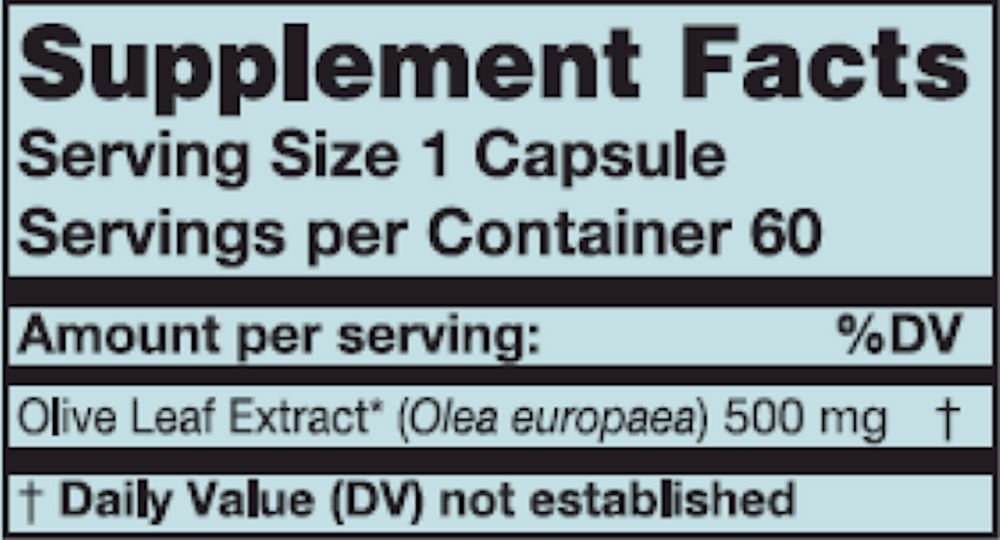
Supplement Facts
Serving Size: 1 Capsule
Servings Per Container: 60
| Amount Per Serving | Amount | |
|---|---|---|
Olive Leaf Extract (Olea europaea) standardized to yield 17-23% oleuropein | 500 mg | |
Common Questions about Olive Leaf
Answers are general educational information, not medical advice for your situation.
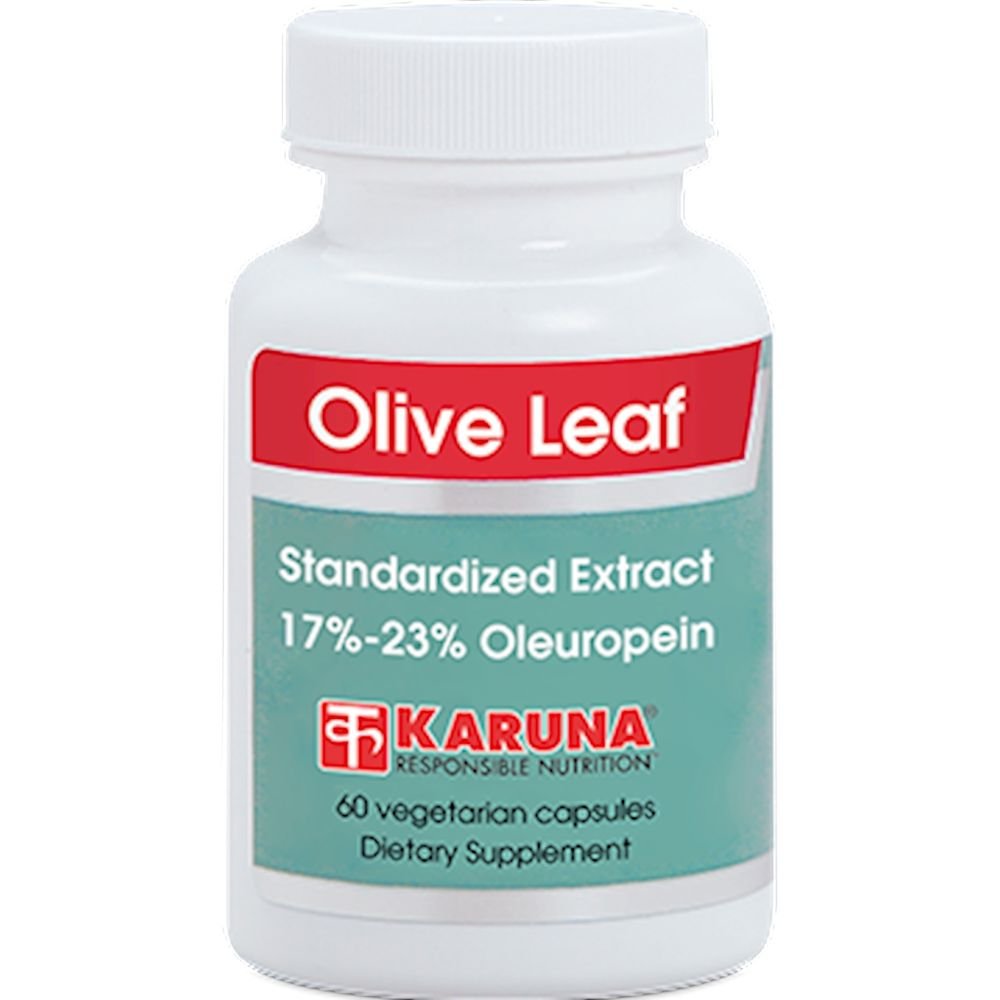
Olive Leaf
By Karuna
From $37.40 · Save 10% with code MARTYROSS10