


short course
Infection Support
Persister Cell Support
A liposomal oil of oregano capsule from Origanum vulgare, designed for improved absorption and daily antimicrobial, antioxidant, and digestive support.



10% off all supplements
Use code at checkout
MARTYROSS10


Opens Femologist.com in a new tab
TreatLyme and Dr. Marty Ross, MD, are affiliated with Femologist. We may earn a commission on purchases made through this link or code.
Quick Facts
Key Ingredients
Oil of Oregano 160mg Extract
Third-party Testing
Dietary

Written by

Dr. Marty Ross, MD
Updated
September 24, 2026
Dr. Ross's Expert Review
I use oil of oregano as one of my go-to herbal immune-support options, and this liposomal version solves a real problem. Standard oregano oil is absorbed poorly. The liposomal delivery in this product wraps the oil in phospholipids and is designed to aid absorption.
Why does that matter? Basic laboratory research, including work from Johns Hopkins, has studied how oregano oil and its components affect bacteria in culture, including biofilm work in a dish. Carvacrol, the dominant component of oregano oil, also inhibits efflux pumps, the machinery microbes use to push out compounds that would otherwise stop them.
In my practice I reach for oregano oil most when a plan calls for a well-studied herbal option. It is not a stand-alone answer. Herbs alone rarely get a person well. Sleep, diet, and a healthy intestinal microbiome come first. But when the plan calls for a herbal option with a long track record, oregano belongs on the short list.
I am candid about what the science does and does not show. Much of the evidence is laboratory based. We do not have large clinical trials of oregano oil in chronic complex illness. Theory and observation, plus the lab work, are what guide me here.
The antioxidant properties are a reasonable bonus. The oil contains compounds that help the body manage oxidative stress. That is a secondary reason I like it, not the main one.
These statements have not been evaluated by the Food and Drug Administration. This product is not intended to diagnose, treat, cure, or prevent any disease. Dr. Ross has a financial relationship with the Femologist store, where this product is sold.
How I Use It in My Practice
I use this product most as part of a broader herbal support plan. The suggested use on the product page is one capsule twice daily, though the label lists a serving size of two capsules. I typically start people low and increase as tolerated, because some people report temporary flu-like feelings when starting herbal products. I watch for digestive discomfort and reduce the dose if it appears. Anyone on prescription medication, or who is pregnant or nursing, should review it with their physician first.
This reflects Dr. Ross's clinical experience and is educational, not medical advice. Work with your treating physician before starting, stopping, or changing any supplement or medication.
The Research, in Dr. Ross's Words
In my research review, the science on oregano oil is consistent on one point: carvacrol, its dominant component, has real antimicrobial activity in the laboratory.
A 2022 study in Bacillus subtilis found carvacrol inhibits bacterial efflux pumps and strengthened the effect of berberine in that laboratory setting. That is laboratory evidence about the compounds, not a recommendation about combining products.
Basic laboratory research, including work from Johns Hopkins, has studied how oregano oil and carvacrol affect bacteria in culture, including biofilm work in a dish. Carvacrol, the dominant component of oregano oil, also inhibits efflux pumps, the machinery microbes use to push out compounds that would otherwise stop them.
There are honest limits to the research data-base. The studies supporting oregano oil are all laboratory experiments, not human trials. And none of this tells us how much active compound a liposomal capsule delivers into a person’s bloodstream. The liposomal absorption claim is a formulation rationale, not a tested finding.
References
From:
Doctor Inspired Formulations
Oregano Essentials is recommended for use as a dietary supplement. The online store you knew as Hopkinton Drug is now Doctor Inspired Formulations. Same products, same team, nothing else has changed.
Directions of Use
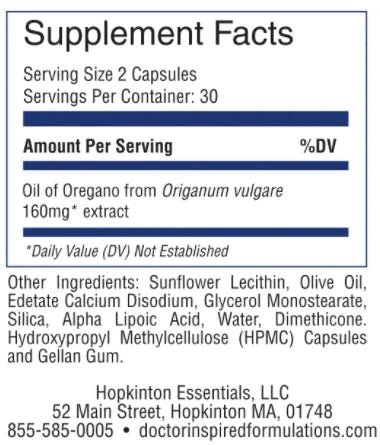
Serving Size 2 Capsules
Does not contain
Excerpted from Doctor Inspired Formulations's product information. These statements have not been evaluated by the Food and Drug Administration.
Supplement Facts
Serving Size: 2 Capsules
Servings Per Container: 30
| Amount Per Serving | Amount | |
|---|---|---|
Oil of Oregano from Origanum Vulgare | 160mg Extract | |
Common Questions about Liposomal Oregano Essentials
Answers are general educational information, not medical advice for your situation.
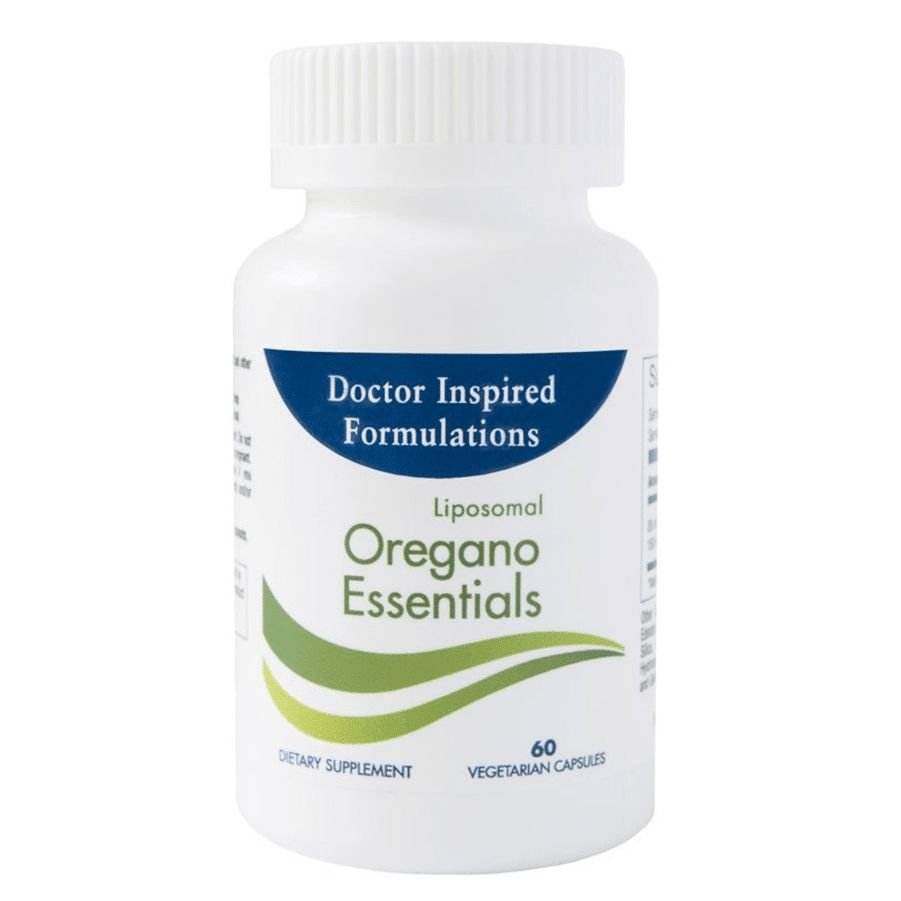
Liposomal Oregano Essentials
By Doctor Inspired Formulations
From $93.00 · Save 10% with code MARTYROSS10
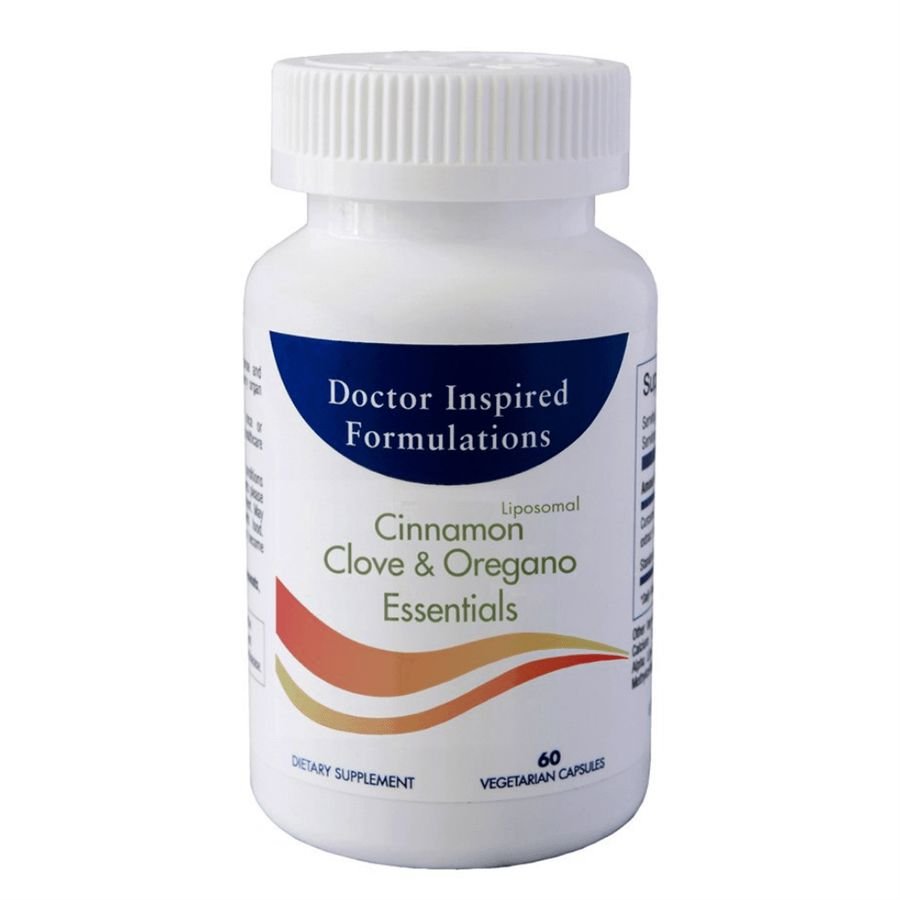
Liposomal Cinnamon Clove Oregano Essentials
Same maker's companion liposomal herbal oil blend, used alongside it in the same plan


Guide
Best Herbal Antibiotic Plans for Lyme, Bartonella, and Babesia
Herbal antimicrobial guide that discusses oregano oil and how to use it

Guide
The Ultimate Bartonella Management Guide
Guide to herbal options where oregano oil is part of the discussion
Guide
A Lyme Disease Antibiotic Guide
Compares herbal germ killers, including oregano oil, with standard options