

Updated:
June 10, 2026
Why Heart Rate Variability Matters
Heart rate variability (HRV) reveals the health of your autonomic nervous system (ANS) and physical health. This article explores natural ways to improve vagal tone and autonomic nervous system function which improve HRV.
Why This Matters. People with tick-borne diseases and mold toxicity live under constant physical and emotional stress that limit HRV. Increased HRV improves
- sleep,
- immune function,
- thinking,
- autonomic dysfunction including POTS (paroxysmal orthostatic tachycardic syndrome),
- mood, and
- recovery.
What Is Heart Rate Variability?
HRV is the variation in time between each heartbeat, measured in milliseconds. Rather than beating at a perfectly steady rhythm, a healthy heart continually adjusts to changes in the body and environment. This adaptability reflects the health of your autonomic nervous system (ANS), the part of your nervous system that controls automatic bodily functions like breathing, digestion, immune response, and—most importantly—how you handle stress.
The autonomic nervous system has two major branches:
- Sympathetic nervous system (SNS) – often referred to as the “fight or flight” system, it prepares the body for stress or activity.
- Parasympathetic nervous system (PNS) – known as the “rest and digest” system, it promotes recovery, relaxation, and repair.
A high HRV means your body can efficiently toggle between these systems based on internal and external demands.
- A low HRV typically signals stress overload, inflammation, or dysfunction in autonomic regulation—common in chronic Lyme disease, mold toxicity, and other long-term illnesses.
Why Heart Rate Variability Matters in Chronic Illness
Patients dealing with Lyme disease, other tick-borne infections, and mold toxicity often experience dysautonomia—dysfunction of the autonomic nervous system. Symptoms like POTS, anxiety, fatigue, poor thinking, temperature instability, and lightheadedness reflect this imbalance.
- HRV offers a non-invasive window into the health of the autonomic nervous system and its ability to regulate stress.
Benefits of a High HRV
A high HRV is associated with:
- Improved stress resilience – Better ability to cope with physical and emotional stressors including exercise.
- Reduced inflammation – HRV is inversely related to levels of CRP and other markers of systemic inflammation.
- Lower cardiovascular risk – Higher HRV correlates with lower risk of heart disease and hypertension.
- Enhanced cognitive function – Stronger memory, attention, and executive function.
- Better sleep quality – Greater parasympathetic activity promotes deep, restorative sleep.
- Improved immune regulation – A balanced ANS supports proper immune surveillance and control of infections.
Lifestyle Strategies to Improve HRV
- Sleep: Prioritize 7–9 hours of sleep per night with consistent bed/wake times.
- Breathing exercises: Practice slow, diaphragmatic breathing (e.g., 4-7-8 breathing or box breathing) to activate the vagus nerve.
- Meditation and mindfulness: Regular practice improves parasympathetic tone and emotional regulation.
- Forest Bathing: Time spent in nature is calming to the autonomic nervous system.
- Exercise: Moderate aerobic and resistance training improve vagal tone and cardiovascular efficiency. Avoid overtraining.
- Plant-forward Diet: Plant-forward diets, free of additives, may improve HRV.
- Limit Alcohol. Alcohol interferes with deep sleep which may hurt HRV.
Wearables to Improve and Measure HRV
Apollo Neuro: A Wearable for Nervous System Recovery
Apollo Neuro is a wearable device that uses gentle vibrations to stimulate the vagus nerve and restore balance to the autonomic nervous system. Worn on the wrist or ankle, it delivers low-frequency tactile stimulation that mimics the effects of deep breathing or touch-based therapies.
What Research Shows About Apollo Neuro
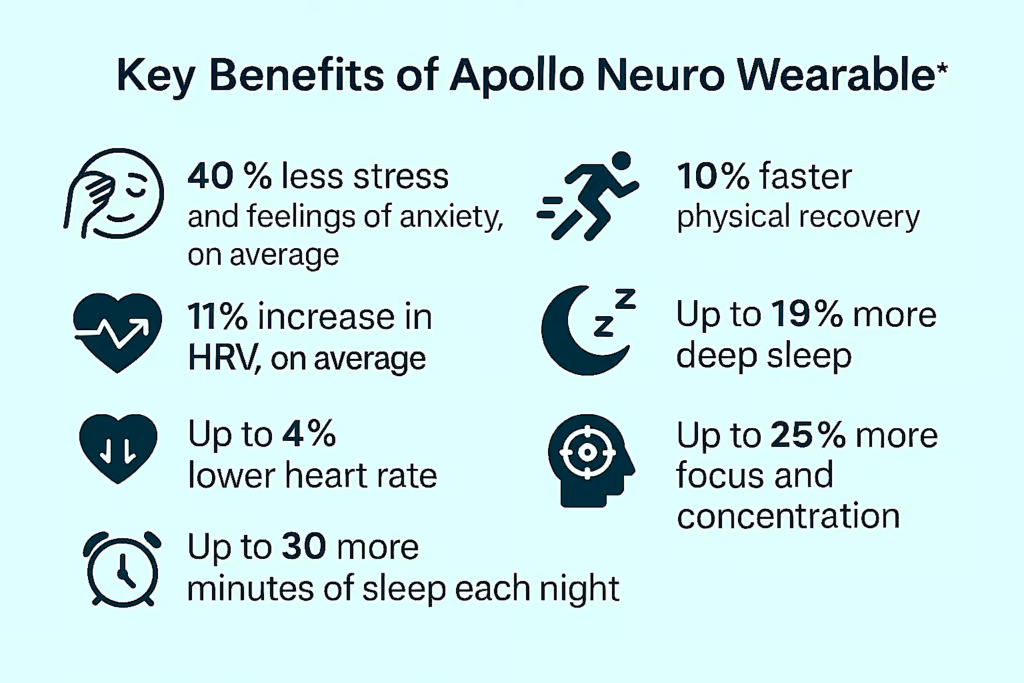
To date, Apollo Neuro has been evaluated in over 17 clinical studies involving more than 1,700 participants, with an additional 12 trials currently underway.
Early study findings report a range of measurable benefits:
- An average 40% reduction in stress and anxiety
- 11% increase in heart rate variability (HRV), a key marker of nervous system balance
- Up to 4% lower resting heart rate
- 10% faster recovery following physical exertion
- Up to 19% more deep sleep per night
- Up to 25% improvement in focus and concentration
- Up to 30 additional minutes of total sleep each night
- Up to 60 minutes of additional sleep when coupled with an Oura Ring using Smart Vibes through the Apollo Neuro App.
These results suggest that consistent use of Apollo Neuro may support resilience, enhance sleep quality, and improve how the body handles stress.
Apollo Neuro Wearable—Learn More or Purchase
I personally find great benefit using Apollo Neuro for sleep, energy, and improved thinking.
Want to receive $60 off Apollo Neuro plus additional discounts on accessories?
- Use Marty Ross, MD’s partnership account: Go Now >>
Monitoring HRV at Home
HRV is typically measured with wearables like:
- WHOOP Band
- Oura Ring
- Apple Watch (with third-party apps like HRV4Training)
- Elite HRV app with compatible chest strap
Consistency is key. Measure your HRV daily under similar conditions (e.g., in the morning before getting out of bed) to track trends.
What is Normal HRV?
Each person has their own normal HRV. A good way to determine your normal HRV is to measure it over time. Watch for lifestyle factors that seem to help or hurt your HRV.
HRV declines with age and is different for men and women. HRV is higher during sleep when people are resting, reflecting increased activity of the parasympathetic nervous system. If you are using a wearable device, check with your device brand to see what normal ranges they have collected for users of their device.
HRV Summary
Heart rate variability is a powerful, accessible metric that reflects the health of your autonomic nervous system. High HRV is a marker of health, resilience, and recovery—and it’s something you can improve with the right tools.
For those recovering from Lyme disease, mold illness, or long-term stress, tracking and improving HRV offers a concrete way to support nervous system healing. Use lifestyle strategies, targeted supplements, and technology like the Apollo Neuro to enhance your body’s ability to rest, repair, and thrive.
*Disclaimer
The ideas and recommendations on this website and in this article are for informational purposes only. For more information about this, review the site wide Terms & Conditions.
Apollo Neuro is not intended to treat or cure any medical conditions and is not a substitute for professional medical care. These statements have not been evaluated by the United States Food and Drug Administration [FDA]. Individual results vary. Speak to your doctor if you have questions and to discuss solutions that may be appropriate for you.
References

About The Author
Dr. Marty Ross, MD is a passionate Lyme disease educator and clinical expert. He helps Lyme sufferers and their physicians see what really works based on his review of the science and extensive real-world experience. Dr. Ross is licensed to practice medicine in Washington State (License: MD00033296) where he has treated thousands of Lyme disease patients in his Seattle practice.
Dr. Marty Ross, MD is a graduate of Indiana University School of Medicine and Georgetown University Family Medicine Residency. He is a member of the International Lyme and Associated Disease Society (ILADS), The Institute for Functional Medicine, and The American Academy of Anti-Aging Medicine (A4M).