

Updated:
June 10, 2026
About Tregs, Th1, Th2, and Th17 Immune Cells
Chronic inflammation, autoimmune disease, and Mast Cell Activation Syndrome are part of chronic Lyme disease and tick-borne infections for many. Chronic inflammation, autoimmune disease, and mast cell activation are due to an imbalance in Th1, Th2, and Th17 components of the immune system. These individual components are controlled through the actions of T regulatory cells, also called Tregs.
Here is a breakdown of what these different parts of the immune system regulate through a release of pro-inflammatory and anti-inflammatory cytokines. The types of cytokines in each of these systems provides a fingerprint to show if someone has too much or too little of each component. Unfortunately, testing for these cytokine fingerprints is not reliable.
- Th1 related immune cells fight intracellular infections like Lyme, Bartonella, Babesia, HIV, Covid, Epstein Barr Virus, CMV and more. Th1 is part of the adaptive immune system and is activated once a germ has passed through the frontline innate immune system which is designed to attack new invaders.
- Th17 related immune cells fight new infections and are found within the mucous membranes and skin of the body. Th17 related immune cells are part of the innate immune system which provides frontline protection against new infections.
- Th2 related immune cells are part of the adaptive immune system. This part of the immune system includes our circulating antibodies made by B cells and allergy related cells like mast cells and eosinophils.
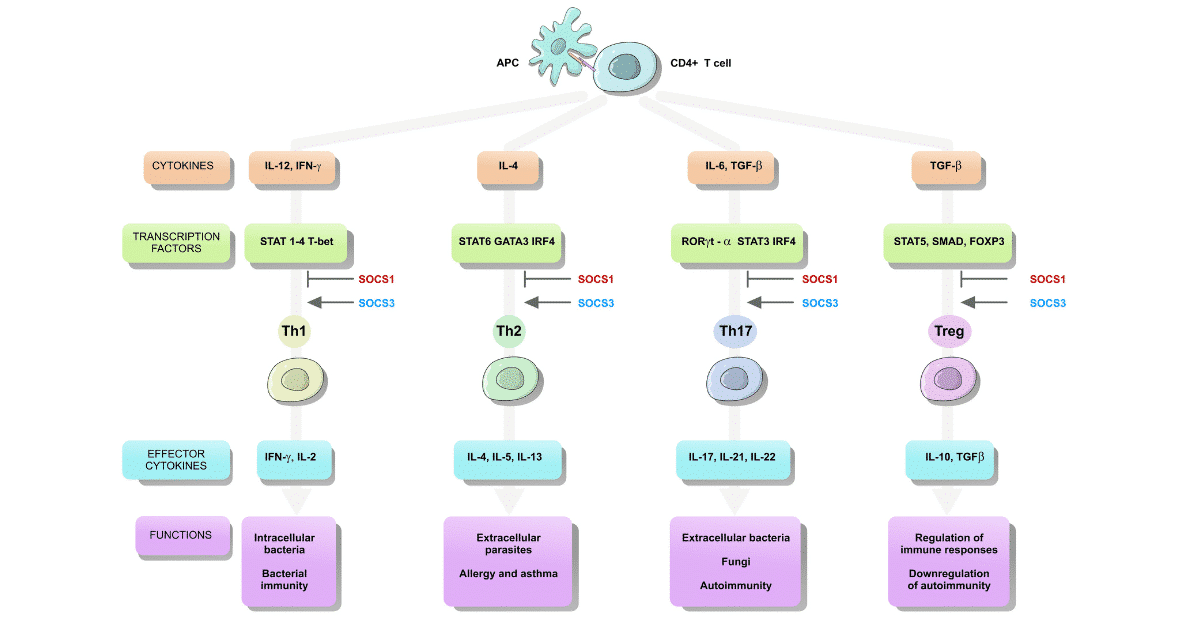
Balance of Th1, Th2, and Th17 is Best
- Autoimmune illnesses are due to excess Th17 and/or Th1 related immune cells.
- Excess chronic inflammation is due to excess Th1 related inflammation compared to Th2—or a Th1/Th2 imbalance.
- Mast Cell Activation Syndrome and allergies are due to excess Th2 relative to Th1—another Th1/Th2 imbalance.
Send in the Treg Parents
It is possible to regulate Th1 or Th2 inflammation directly by taking cytokine regulators like curcumin or prescription Plaquenil—or by taking mast cell regulators like quercetin or antihistamines like Zyrtec. But a stronger way to balance this inflammation is through improving Treg cell numbers or function. Think of Tregs as the parent in the room controlling the unruly Th1 and Th2 children.
As the parent in the room, Tregs also regulate over exuberant Th1 and Th17 children that lead to autoimmune illnesses.
LDN & Thymus Bioregulators to the Rescue
In my practice, I have found two useful ways to improve Treg function. This includes using low dose naltrexone (LDN) and the peptide Thymosin Alpha-1. However, the FDA no longer allows the production of Thymosin Alpha-1. Fortunately, Thymus bioregulator complex that contains thymogen and immune peptide A2 may mimic the effect of the peptide Thymosin Alpha-1. You can use LDN or thymus bioregulators together or independently. If you are trying either one, give at least 6 months to see if they work.
- Thymus Bioregulator Complex, 1 pill 2 times a day. (Thymus bioregulators include thymogen and immune peptide A2.)
- LDN. Start at 1.5 mg a day for two weeks, then at 3.0 mg for 2 weeks, and finally at 4.5 mg a day on an ongoing basis. Because it can cause insomnia in some, take it in the morning.If a person has a lot of side effects or gets worse with their symptoms initially, then decrease the dose to half of the above. Often the side effects will go away by lowering the dose.
More about LDN vs Thymus Bioregulator Complex
LDN is also effective at regulating mast cells by directly attaching to mast cell toll receptors. And LDN regulates fibromyalgia and fibromyalgia-like pain by directly binding to toll receptors and microglia immune cells in the brain that regulate pain transmission. Keep these additional functions in mind as you choose between using Thymogen Alpha-1 and LDN. One more point, LDN requires a prescription from a compounding pharmacy while thymus bioregulators are sold as supplements. For more information see Low Dose Naltrexone (LDN) & Lyme and The Best Oral Peptide Guide for Lyme, Tick-borne Infections, & Mold Toxicity
Disclaimer
The ideas and recommendations on this website and in this article are for informational purposes only. For more information about this, review the sitewide Terms & Conditions.
References

About The Author
Dr. Marty Ross, MD is a passionate Lyme disease educator and clinical expert. He helps Lyme sufferers and their physicians see what really works based on his review of the science and extensive real-world experience. Dr. Ross is licensed to practice medicine in Washington State (License: MD00033296) where he has treated thousands of Lyme disease patients in his Seattle practice.
Dr. Marty Ross, MD is a graduate of Indiana University School of Medicine and Georgetown University Family Medicine Residency. He is a member of the International Lyme and Associated Disease Society (ILADS), The Institute for Functional Medicine, and The American Academy of Anti-Aging Medicine (A4M).